457 posters, 2 videos, 2 audios, 8 topics, 45 sessions, 401 authors, 265 institutions
ePostersLive by SciGen Technologies S.A. All rights reserved.
49th Annual Regional Anesthesiology and Acute Pain Medicine Meeting
March 21-23, 2024 | The Hilton Bayfront San Diego | San Diego, California

5529
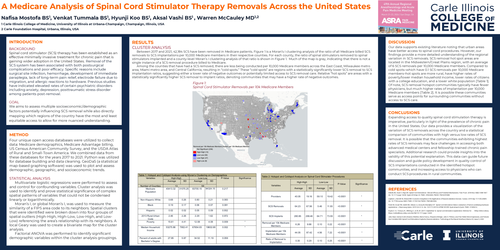
A MEDICARE ANALYSIS OF SPINAL CORD STIMULATOR THERAPY REMOVALS ACROSS THE UNITED STATES
Poster Presenter
Part of Topic
Scientific Abstracts > Chronic Pain
Title: A Medicare Analysis of Spinal Cord Stimulator Therapy Removals Across the United States
Background:
Spinal cord stimulator (SCS) therapy has been established as an effective minimally invasive treatment for chronic pain that is gaining wider adoption in the United States.1 Previous research indicates a national disparity in SCS access, favoring Caucasian and affluent individuals, as well as a potential urban and male bias in access.2 The underlying physiological and psychosocial factors contributing to this connection remain relatively unclear. In order to gain a greater understanding of these aspects, this study seeks to identify regions of the country with the highest as well as lowest access to SCS therapy. Such mapping allows for comprehensive evaluation of the influence of various socioeconomic factors on SCS access.
Though generally placed as a solution providing long-term pain relief, a subset of patients ultimately undergo removal of the spinal cord stimulator (SCS) system. Removal of the SCS system has been associated with both postsurgical complications and poor efficacy. Specific reasons include surgical site infection, hemorrhage, development of immediate paraplegia, lack of long-term pain relief, electrode failure due to migration, and allergic reactions to hardware.3,4 Future need for MRI has also been cited as a reason for SCS removal.4 Previous studies have indicated elevated rates of certain psychiatric disorders including anxiety, depression, posttraumatic stress disorder among patients post-explantation, as well as higher rates of explantation among women.3,5 A greater understanding of the underlying physiological and psychosocial factors contributing to the disparity in SCS outcomes is essential in providing more equitable care.