457 posters, 2 videos, 2 audios, 8 topics, 45 sessions, 401 authors, 265 institutions
ePostersLive by SciGen Technologies S.A. All rights reserved.
49th Annual Regional Anesthesiology and Acute Pain Medicine Meeting
March 21-23, 2024 | The Hilton Bayfront San Diego | San Diego, California

5348
OPIOID REDUCTION AND ENHANCED RECOVERY IN ORTHOPEDIC SURGERIES: A PILOT RANDOMIZED CONTROL TRIAL IN KNEE ARTHROPLASTY.
Poster Presenter
Authors
Affiliations
Part of Topic
Scientific Abstracts > Acute Pain
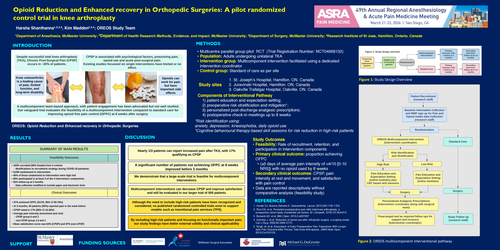
Title: Opioid Reduction and Enhanced recovery in Orthopedic Surgeries: a pilot randomized control trial in knee arthroplasty
Acronym: OREOS Knee
Introduction
Knee osteoarthritis is a leading cause of pain, limited function, and long-term disability worldwide (1). Although knee arthroplasty is a successful treatment, around 20% of patients develop chronic post-surgical pain (CPSP) and report dissatisfaction (2). Psychological factors, pre-existing pain, opioid use, and acute post-surgical pain burden are known to be associated with CPSP (2). Despite some benefits, opioids can lead to long-term adverse effects such as persistent opioid use, addiction, and death. Although CPSP after knee arthroplasty is recognised as important, we identified several limitations within the existing literature. Most studies focus on single interventions with limited or no effect, and the majority have short term follow up (3, 4). Additionally, individual patient variability in pain resolution, and patient values and preferences have not been considered (5). The traditional approach to post-discharge pain management has been to prescribe a set number of institutionally standardized pain management medications, which can include non-steroidal anti-inflammatory drugs (NSAIDs) and/or opioids. This approach does not account for individual pain trajectories and preferences and patients find that there is no identifiable support for pain and recovery in the first few months. Multiple guidelines advocate a multicomponent team-based approach to facilitate personalized care and improved satisfaction.However, these have not been well studied. The objectives of this vanguard trial are to evaluate feasibility of a multicomponent intervention compared to standard care. Clinical objectives were to evaluate the effect of the intervention on opioid free pain control (OFPC) at 8 weeks and other clinical outcomes.