136 posters, 2 topics, 27 sessions, 339 authors, 88 institutions
ePostersLive by SciGen Technologies S.A. All rights reserved.
2024 ACP Annual Session
NOVEMBER 6-9, 2024 | MARCO ISLAND, FL JW MARRIOT

183
<p>Use of CAMBRA Protocol to Treatment Plan the Medically Complex Patients </p> <p> </p>
Poster Presenter
Authors
Affiliations
Part of Topic
Original Research
Introduction
Prosthodontic patients are not only dentally complex but often medically complicated. With co-morbidities and use of medications, it is important to assess how a patient’s medical history effects the mortality of planned treatments. The CAMBRA protocol is an often-used tool to assess patient risk and predict treatment success. We will be exploring how to use this guide to assess disorders that may effect changes to the oral microbiome, change is salivary flow, and dental timeline of destruction to make treatment planning, an often-subjective practice, into a more objective process. We will look at Sjogren Syndrome, the second most common rheumatoid disease, and how to analyze the effects of disease and use that for thoughtful, purposeful treatment planning techniques.
Methods and materials
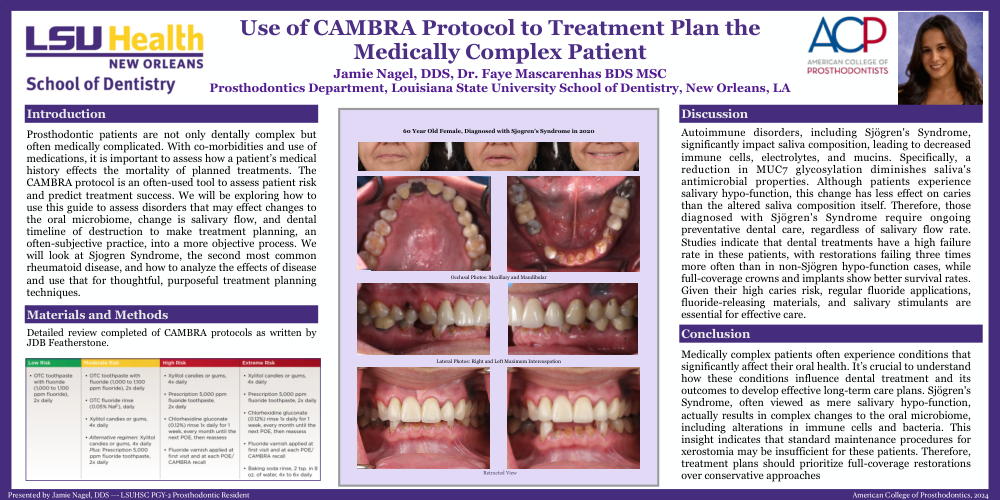
Autoimmune disorders, including Sjögren's Syndrome, significantly impact saliva composition, leading to decreased immune cells, electrolytes, and mucins. Specifically, a reduction in MUC7 glycosylation diminishes saliva's antimicrobial properties. Although patients experience salivary hypo-function, this change has less effect on caries than the altered saliva composition itself. Therefore, those diagnosed with Sjögren's Syndrome require ongoing preventative dental care, regardless of salivary flow rate. Studies indicate that dental treatments have a high failure rate in these patients, with restorations failing three times more often than in non-Sjögren hypo-function cases, while full-coverage crowns and implants show better survival rates. Given their high caries risk, regular fluoride applications, fluoride-releasing materials, and salivary stimulants are essential for effective care.
Conclusion
Medically complex patients often experience conditions that significantly affect their oral health. It’s crucial to understand how these conditions influence dental treatment and its outcomes to develop effective long-term care plans. Sjögren's Syndrome, often viewed as mere salivary hypo-function, actually results in complex changes to the oral microbiome, including alterations in immune cells and bacteria. This insight indicates that standard maintenance procedures for xerostomia may be insufficient for these patients. Therefore, treatment plans should prioritize full-coverage restorations over conservative approaches