Loading...

241 posters, 10 topics, 7 sessions, 899 authors, 296 institutions

ePostersLive by SciGen Technologies S.A. All rights reserved.

The AAPS 103rd Annual Meeting 2025

May 24-27, 2025 | Austin, Texas

The AAPS 103rd Annual Meeting 2025 banner

P31

Role Of Antibiotics Duration On Outcomes In Post-mastectomy Implant-based Breast Reconstruction
Part of Topic

Breast Reconstruction

Role of Antibiotics Duration on Outcomes in Post-Mastectomy Implant-based Breast Reconstruction


Background

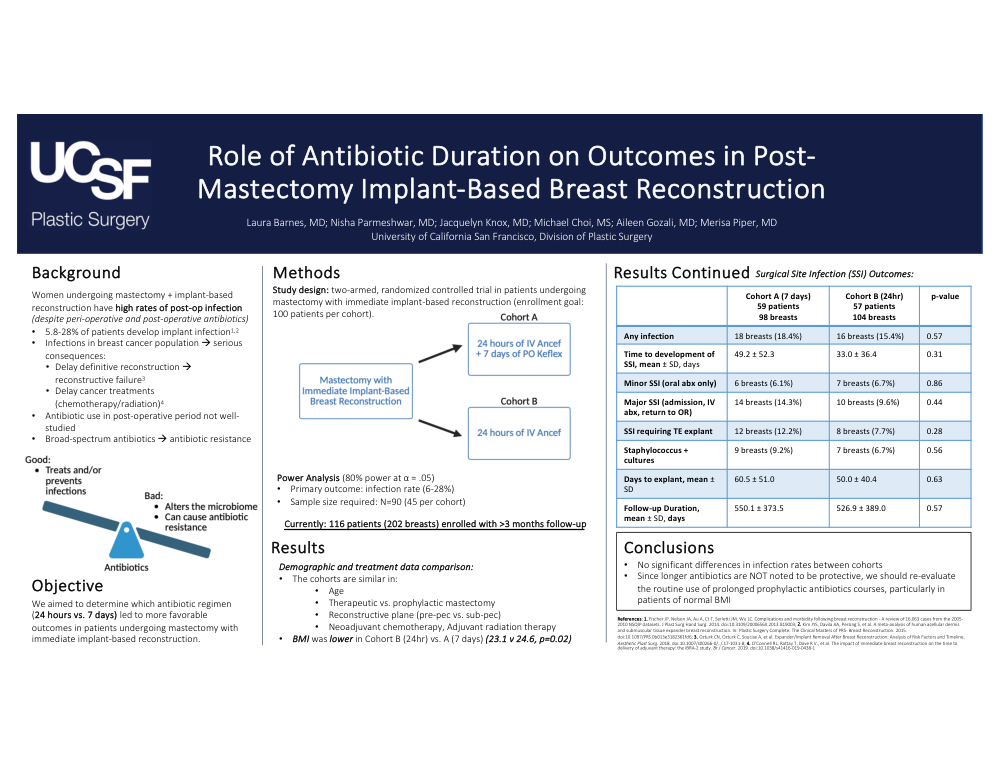
High rates of post-operative infections in women who undergo mastectomy with implant-based reconstruction (in spite of peri-operative and post-operative antibiotics)

•5.8-28% of patients develop implant infection1,2
•Antibiotic use in the post-operative period is not well-studied or supported by data

Infections in the breast cancer population can have serious consequences:

•Delay definitive reconstruction à reconstructive failure3
•Delay cancer-related treatments including chemotherapy and radiation4
•Use of broad-spectrum antibiotics can lead to antibiotic resistance patterns
 

Objective

We aimed to determine which antibiotic regimen led to more favorable outcomes in cases of mastectomy with immediate implant-based reconstruction: 24 hours vs. 7 days


Methods

We designed a two-armed, randomized controlled trial in patients undergoing mastectomy with immediate implant-based reconstruction, ultimately aiming to enroll 100 patients per cohort


Currently 116 patients (202 breasts) are enrolled with at least 3 months post-operative follow-up


Demographic and treatment data by group:


•Patient age, whether they had therapeutic v prophylactic mastectomy, reconstructive plane (pre-pec v sub-pec), receipt of neoadjuvant chemotherapy and receipt of adjuvant radiation therapy were all comparable between groups with no statistically significant differences
•BMI was significantly lower in the group of patients who were randomized to receive 24 hours of antibiotics (23.1 v 24.6, p=0.02)
 

Conclusions

•We found no significant differences in infection rates between groups of patients who received 24 hours compared to seven days of prophylactic antibiotics
•Since longer antibiotics are NOT noted to be protective, we should re-evaluate the routine use of prolonged prophylactic antibiotics courses, particularly in patients of normal BMI
aaps2025 banner
Copyright © 2015-2026, ePostersLive® SciGen is a registered trademark of SciGen Technologies S.A. Patent pending.

This website and third-party tools we use rely on cookies for the best user experience. By selecting "I agree", you agree to cookie usage as described in our Privacy Policy.