4,068 posters, 219 videos, 101 topics, 69 sessions, 14,365 authors, 6,128 institutions
ePostersLive by SciGen Technologies S.A. All rights reserved.
Alzheimer's Association International Conference 2026
July 12-15, 2026 | London, United Kingdom, and Online

13796
Sex- And Diet-Dependent Effects Of Nilotinib On Cognitive Function In 3xTg-AD Mice
Poster Presenter
Part of Topic
Virtual
Video
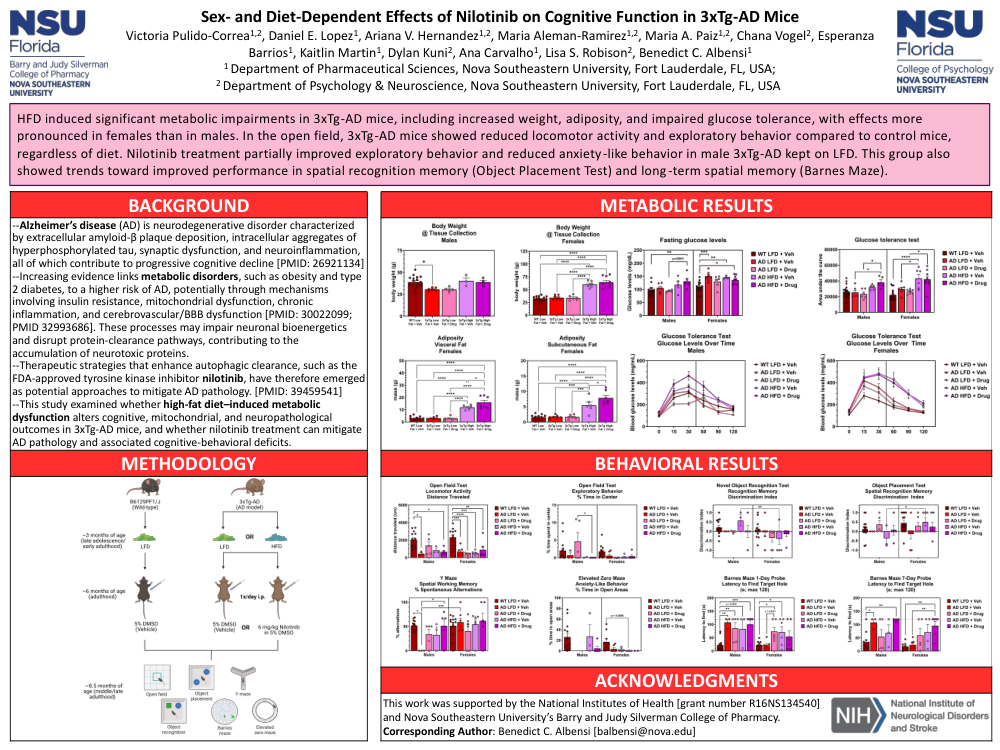
--Alzheimer’s disease (AD) is neurodegenerative disorder characterized by extracellular amyloid-β plaque deposition, intracellular aggregates of hyperphosphorylated tau, synaptic dysfunction, and neuroinflammation, all of which contribute to progressive cognitive decline [PMID: 26921134]
--Increasing evidence links metabolic disorders, such as obesity and type 2 diabetes, to a higher risk of AD, potentially through mechanisms involving insulin resistance, mitochondrial dysfunction, chronic inflammation, and cerebrovascular/BBB dysfunction [PMID: 30022099; PMID 32993686]. These processes may impair neuronal bioenergetics and disrupt protein-clearance pathways, contributing to the accumulation of neurotoxic proteins.
--Therapeutic strategies that enhance autophagic clearance, such as the FDA-approved tyrosine kinase inhibitor nilotinib, have therefore emerged as potential approaches to mitigate AD pathology. [PMID: 39459541]
--This study examined whether high-fat diet–induced metabolic dysfunction alters cognitive, mitochondrial, and neuropathological outcomes in 3xTg-AD mice, and whether nilotinib treatment can mitigate AD pathology and associated cognitive-behavioral deficits.
This work was supported by the National Institutes of Health [grant number R16NS134540] and Nova Southeastern University’s Barry and Judy Silverman College of Pharmacy. Corresponding Author: Benedict C. Albensi [balbensi@nova.edu]
Comments
Email is required but is not shown publicly.
Loading comments...