4,068 posters, 219 videos, 101 topics, 69 sessions, 14,365 authors, 6,128 institutions
ePostersLive by SciGen Technologies S.A. All rights reserved.
Alzheimer's Association International Conference 2026
July 12-15, 2026 | London, United Kingdom, and Online

11828
Intranasal Administration Of Iron, Buthionine-sulfoximine, And β-amyloid Causes Cognitive And Olfactory Impairments In Rodents.
Poster Presenter
Part of Topic
Virtual
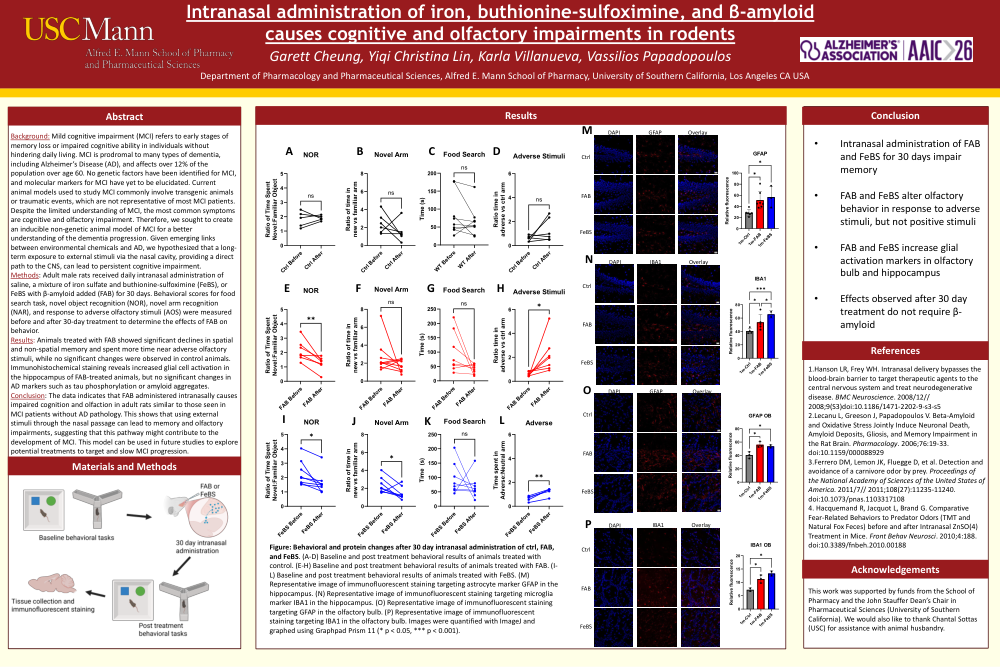
Background: Mild cognitive impairment (MCI) refers to early stages of memory loss or impaired cognitive ability in individuals without hindering daily living. MCI is prodromal to many types of dementia, including Alzheimer’s Disease (AD), and affects over 12% of the population over age 60. No genetic factors have been identified for MCI, and molecular markers for MCI have yet to be elucidated. Current animal models used to study MCI commonly involve transgenic animals or traumatic events, which are not representative of most MCI patients. Despite the limited understanding of MCI, the most common symptoms are cognitive and olfactory impairment. Therefore, we sought to create an inducible non-genetic animal model of MCI for a better understanding of the dementia progression. Given emerging links between environmental chemicals and AD, we hypothesized that a long-term exposure to external stimuli via the nasal cavity, providing a direct path to the CNS, can lead to persistent cognitive impairment.
Methods: Adult male rats received daily intranasal administration of saline, a mixture of iron sulfate and buthionine-sulfoximine (FeBS), or FeBS with β-amyloid added (FAB) for 30 days. Behavioral scores for food search task, novel object recognition (NOR), novel arm recognition (NAR), and response to adverse olfactory stimuli (AOS) were measured before and after 30-day treatment to determine the effects of FAB on behavior.
Results: Animals treated with FAB showed significant declines in spatial and non-spatial memory and spent more time near adverse olfactory stimuli, while no significant changes were observed in control animals. Immunohistochemical staining reveals increased glial cell activation in the hippocampus of FAB-treated animals, but no significant changes in AD markers such as tau phosphorylation or amyloid aggregates.
Conclusion: The data indicates that FAB administered intranasally causes impaired cognition and olfaction in adult rats similar to those seen in MCI patients without AD pathology. This shows that using external stimuli through the nasal passage can lead to memory and olfactory impairments, suggesting that this pathway might contribute to the development of MCI. This model can be used in future studies to explore potential treatments to target and slow MCI progression.
Comments
Email is required but is not shown publicly.
Loading comments...