193 posters, 19 videos, 10 audios, 3 topics, 28 sessions, 709 authors, 279 institutions
ePostersLive by SciGen Technologies S.A. All rights reserved.
9th World Congress on Vascular Access 2026
15 - 17 April, 2026 | Valencia, Spain
367
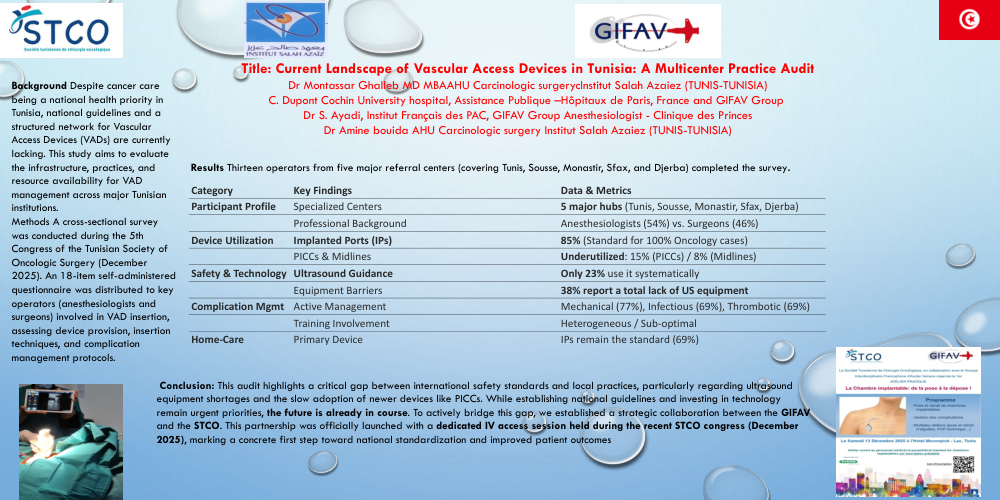
Current Landscape of Vascular Access Devices in Tunisia: A Multicenter Practice Audit
Poster Presenter
Authors
Montassar Ghalleb, Amine Bouida, Seamy Ayadi, Christian Dupont
Affiliations
Surgical oncology department Institut Salah Azaiez of oncology, Surgical oncology Institut Salah Azaiez de cancerologie, GIFAV Group (French speaking association for vascular access), GIFAV Group (French speaking association for vascular access)
Part of Topic
This E-poster presents a multicenter audit titled "Current Landscape of Vascular Access Devices in Tunisia: A Multicenter Practice Audit" , co-authored by Dr. Montassar Ghalleb, C. Dupont, Dr. S. Ayadi, and Dr. Amine Bouida. The study aims to evaluate the infrastructure, practices, and resource availability for Vascular Access Device (VAD) management across major Tunisian institutions, highlighting the current lack of national guidelines and a structured network despite cancer care being a national priority. To assess this, a cross-sectional survey utilizing an 18-item questionnaire was distributed to key operators, namely anesthesiologists and surgeons, during the 5th Congress of the Tunisian Society of Oncologic Surgery in December 2025. The results are based on the responses of thirteen operators from five major referral hubs (Tunis, Sousse, Monastir, Sfax, and Djerba), comprising 54% anesthesiologists and 46% surgeons. The findings reveal that Implanted Ports (IPs) are the predominant device, utilized by 85% of operators and serving as the standard for 100% of oncology cases , whereas PICCs (15%) and Midlines (8%) remain significantly underutilized. Regarding safety and technology, only 23% of operators use ultrasound guidance systematically, with 38% reporting a total lack of access to ultrasound equipment. While the majority of practitioners actively manage mechanical (77%), infectious (69%), and thrombotic (69%) complications, their involvement in nursing training is reported as heterogeneous. Ultimately, the audit concludes that there is a significant gap between international safety standards and local practice, primarily due to equipment shortages. It underscores an urgent need to establish national guidelines, standardize training programs, and invest in ultrasound technology to improve patient safety and outcomes