193 posters, 19 videos, 10 audios, 3 topics, 28 sessions, 709 authors, 279 institutions
ePostersLive by SciGen Technologies S.A. All rights reserved.
9th World Congress on Vascular Access 2026
15 - 17 April, 2026 | Valencia, Spain

362
This website and third-party tools we use rely on cookies for the best user experience. By selecting "I agree", you agree to cookie usage as described in our Privacy Policy.
193 posters, 19 videos, 10 audios, 3 topics, 28 sessions, 709 authors, 279 institutions
ePostersLive by SciGen Technologies S.A. All rights reserved.
15 - 17 April, 2026 | Valencia, Spain
362
Universidade do Estado do Rio de Janeiro, UERJ, State University of Rio de Janeiro, State University of Rio de Janeiro, State University of Rio de Janeiro, State University of Rio de Janeiro
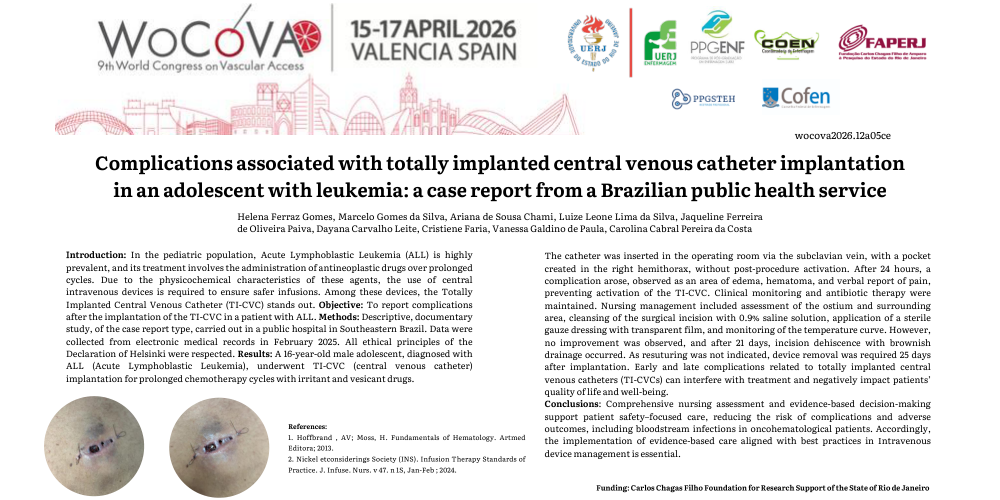
Introduction: In the pediatric population, Acute Lymphoblastic Leukemia (ALL) is highly prevalent, and its treatment involves the administration of antineoplastic drugs over prolonged cycles. Due to the physicochemical characteristics of these agents, the use of central intravenous devices is required to ensure safer infusions. Among these devices, the Totally Implanted Central Venous Catheter (TI-CVC) stands out. Objective: To report complications after the implantation of the TI-CVC in a patient with ALL. Methods: Descriptive, documentary study, of the case report type, carried out in a public hospital in Southeastern Brazil. Data were collected from electronic medical records in February 2025. All ethical principles of the Declaration of Helsinki were respected. Results: A 16-year-old male adolescent, diagnosed with ALL (Acute Lymphoblastic Leukemia), underwent TI-CVC (central venous catheter) implantation for prolonged chemotherapy cycles with irritant and vesicant drugs. The catheter was inserted in the operating room via the subclavian vein, with a pocket created in the right hemithorax, without post-procedure activation. After 24 hours, a complication arose, observed as an area of edema, hematoma, and verbal report of pain, preventing activation of the TI-CVC. Clinical monitoring and antibiotic therapy were maintained. Nursing management included assessment of the ostium and surrounding area, cleansing of the surgical incision with 0.9% saline solution, application of a sterile gauze dressing with transparent film, and monitoring of the temperature curve. However, no improvement was observed, and after 21 days, incision dehiscence with brownish drainage occurred. As resuturing was not indicated, device removal was required 25 days after implantation. Early and late complications related to totally implanted central venous catheters (TI-CVCs) can interfere with treatment and negatively impact patients’ quality of life and well-being. Conclusions: Comprehensive nursing assessment and evidence-based decision-making support patient safety–focused care, reducing the risk of complications and adverse outcomes, including bloodstream infections in oncohematological patients. Accordingly, the implementation of evidence-based care aligned with best practices in Intravenous device management is essential.