193 posters, 19 videos, 10 audios, 3 topics, 28 sessions, 709 authors, 279 institutions
ePostersLive by SciGen Technologies S.A. All rights reserved.
9th World Congress on Vascular Access 2026
15 - 17 April, 2026 | Valencia, Spain

341
<p>Institutional variability in vascular access device selection, dwell time and complications: a multicenter cohort study</p>
Part of Topic
Institutional variability in vascular access device selection, dwell time and complications: a multicenter cohort study
Introduction:
Vascular access devices (VADs) are widely used in hospitalized patients and are essential for intravenous therapy. However, suboptimal device selection and short dwell times contribute to avoidable complications, repeated insertions, and increased workload. Understanding real-world patterns of VAD use and outcomes across institutions is critical to inform quality improvement strategies.
Methods:
A retrospective multicenter cohort study was conducted in seven public hospitals in Spain during 2023. Hospitals differed in size, case mix, and availability of vascular access specialist teams (VASTs). All VADs inserted in adult hospitalized patients were included, with each device considered as the unit of analysis. Data were extracted from institutional vascular access registries. Outcomes included device type distribution, dwell time, complication rates, and variability between centers. Associations between dwell time, complications, and institutional characteristics were explored using descriptive and inferential analyses.
Results:
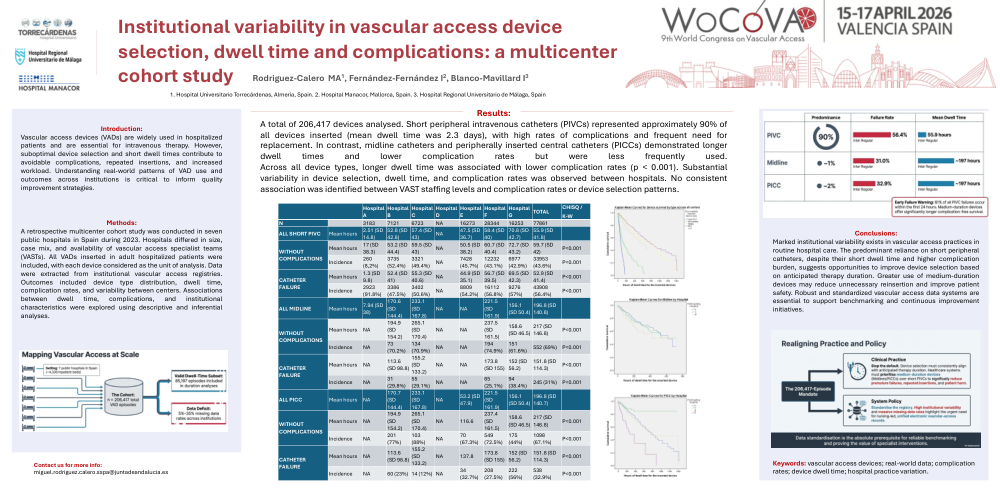
A total of 206,417 device registers were analysed. Short peripheral intravenous catheters (PIVCs) represented approximately 90% of all devices inserted. Their mean dwell time was 2.3 days, with high rates of complications and frequent need for replacement. In contrast, midline catheters and peripherally inserted central catheters (PICCs) demonstrated longer dwell times and lower complication rates but were infrequently used.
Across all device types, longer dwell time was associated with lower complication rates (p < 0.001). Substantial variability in device selection, dwell time, and complication rates was observed between hospitals. No consistent association was identified between VAST staffing levels and complication rates or device selection patterns.
Conclusions:
Marked institutional variability exists in vascular access practices in routine hospital care. The predominant reliance on short peripheral catheters, despite their short dwell time and higher complication burden, suggests opportunities to improve device selection based on anticipated therapy duration. Greater use of medium-duration devices may reduce unnecessary reinsertion and improve patient safety. Robust and standardized vascular access data systems are essential to support benchmarking and continuous improvement initiatives.
Keywords: vascular access devices; real-world data; complication rates; device dwell time; hospital practice variation.