193 posters, 19 videos, 10 audios, 3 topics, 28 sessions, 709 authors, 279 institutions
ePostersLive by SciGen Technologies S.A. All rights reserved.
9th World Congress on Vascular Access 2026
15 - 17 April, 2026 | Valencia, Spain

212
<p>Closed-loop flushing to restore patency of a citrate-locked dialysis catheter obstructed by intraluminal precipitates: a case report</p>
Poster Presenter
Part of Topic
Closed-loop flushing to restore patency of a citrate-locked dialysis catheter obstructed by intraluminal precipitates
Julita Orankiewicz, Dr Bartosz Sadownik
Medical University of Warsaw, II Department of Anaesthesiology and Intensive Care
Introduction
Trisodium citrate is widely used as a locking solution in hemodialysis catheters due to its anticoagulant and antimicrobial properties. Under certain conditions (such as prolonged stagnation, admixture with blood and infused drugs, or pH fluctuations) calcium-citrate complexes may destabilize, resulting in precipitation and catheter obstruction. This may impair catheter function and pose a significant challenge, particularly in patients with limited vascular access.
Case Report
35-year-old female admitted to the ICU due to delayed graft function after kidney transplantation. Required CRRT; severely limited vascular access (DIVA 5). Tunneled dialysis catheter inserted at the right venous angle. Repeated surgeries → interruption of CRRT; catheter locked with 4% trisodium citrate.
Why did calcium precipitates form?
In vivo: citrate is diluted and rapidly metabolized → calcium–citrate complexes remain soluble. In catheter lumen: high citrate concentration, stagnation, and slow mixing with calcium-rich blood → local supersaturation. Supersaturation → crystal formation → intraluminal accumulation → catheter obstruction.
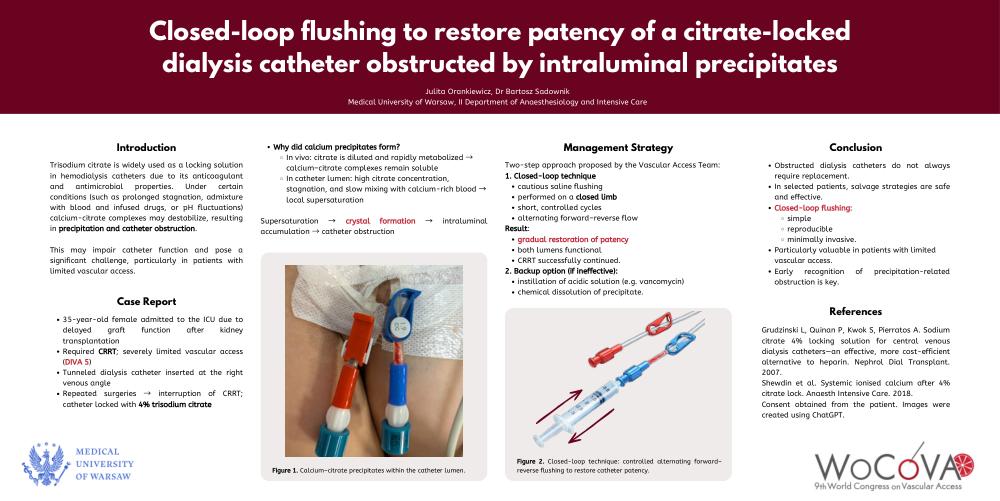
Figure 1. Calcium–citrate precipitates within the catheter lumen.
Management Strategy
Two-step approach proposed by the Vascular Access Team:
- Closed-loop technique: cautious saline flushing performed on a closed limb, short, controlled cycles, alternating forward–reverse flow. Result: gradual restoration of patency, both lumens functional, CRRT successfully continued.
- Backup option (if ineffective): instillation of acidic solution (e.g. vancomycin), chemical dissolution of precipitate.
Figure 2. Closed-loop technique: controlled alternating forward–reverse flushing to restore catheter patency.
Conclusion
Obstructed dialysis catheters do not always require replacement. In selected patients, salvage strategies are safe and effective. Closed-loop flushing: simple, reproducible, minimally invasive. Particularly valuable in patients with limited vascular access. Early recognition of precipitation-related obstruction is key.
References
Grudzinski L, Quinan P, Kwok S, Pierratos A. Sodium citrate 4% locking solution for central venous dialysis catheters—an effective, more cost-efficient alternative to heparin. Nephrol Dial Transplant. 2007.
Shewdin et al. Systemic ionised calcium after 4% citrate lock. Anaesth Intensive Care. 2018.
Consent obtained from the patient. Images were created using ChatGPT.