1,267 posters, 47 videos, 13 topics, 4 sessions, 853 authors
ePostersLive by SciGen Technologies S.A. All rights reserved.
SOHO 2026 Annual Meeting
September 9 - 12, 2026 | George R. Brown Convention Center, Houston, Texas

AML - 1443
Age, Racial, and Ethnic-Based Disparities in Acute Erythroid Leukemia
Poster Presenter
Authors
Part of Topic
Acute Myeloid Leukemia (AML)
Background
Acute erythroid leukemia (AEL) is a rare and aggressive subtype of acute myeloid leukemia (AML) characterized by poor overall survival and limited population-level data regarding demographic disparities. Understanding the influence of age, race, and ethnicity on survival outcomes is essential for identifying vulnerable populations and improving equity in disease management.
Methods
We conducted a multicenter retrospective study using TriNetX, a global database of de-identified electronic health records. Subsequently, 1:1 propensity score matching was performed including prior myeloid disorders, prior chemotherapy treatment, hypomethylating agents, venetoclax, and bone marrow transplant. Survival analysis was performed evaluating overall survival (OS) among patients diagnosed with AEL. Kaplan-Meier survival curves were generated to assess differences in 5-year survival according to age, race, and ethnicity. Comparisons between groups were analyzed using log-rank testing, with statistical significance defined as P<0.05.
Results
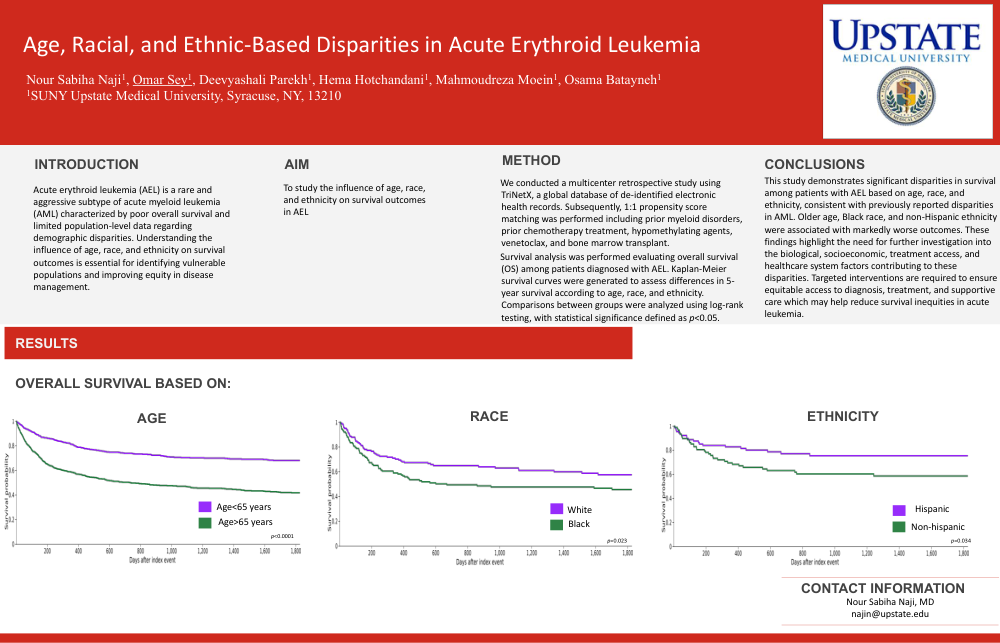
Significant age-related disparities in survival were observed. Patients younger than 65 years demonstrated substantially improved OS compared with patients older than 65 years (67.98% vs 41.86% with 565 patients in each cohort, P<0.0001). Racial disparities were also identified; White patients exhibited higher survival rates than Black patients (57.62% vs 45.65% with 166 patients in each cohort, P=0.023). Additionally, ethnicity-based differences were noted, as Hispanic patients had significantly better survival outcomes compared with non-Hispanic patients (75.47% vs 58.63% with 92 patients in each cohort, P=0.034).
Conclusion
This study demonstrates significant disparities in survival among patients with AEL based on age, race, and ethnicity, consistent with previously reported disparities in AML. Older age, Black race, and non-Hispanic ethnicity were associated with markedly worse outcomes. These findings highlight the need for further investigation into the biological, socioeconomic, treatment access, and healthcare system factors contributing to these disparities. Targeted interventions are required to ensure equitable access to diagnosis, treatment, and supportive care which may help reduce survival inequities in acute leukemia.