1,267 posters, 47 videos, 13 topics, 4 sessions, 853 authors
ePostersLive by SciGen Technologies S.A. All rights reserved.
SOHO 2026 Annual Meeting
September 9 - 12, 2026 | George R. Brown Convention Center, Houston, Texas

CLL - 787
Micro-Dosed Obinutuzumab: A Novel Debulking Strategy in a Rare Case of Leukostasis From Chronic Lymphocytic Leukemia
Poster Presenter
Authors
Part of Topic
Chronic Lymphocytic Leukemia (CLL)
Introduction: Chronic lymphocytic leukemia/small lymphocytic lymphoma (CLL/SLL) represents one of the indolent non-Hodgkin lymphomas portrayed by the progressive accumulation of monoclonal B-lymphocytes. The incidence of leukostasis in CLL is exceptionally rare and is scarcely reported in the literature. Its presence represents a vital clinical importance as it guides treatment and prognosis.
Objective: The main objective of this case study is to describe the unusual incidence of leukostasis in CLL and outline the role of obintuzumab microdosing in the setting of CLL-associated leukostasis.
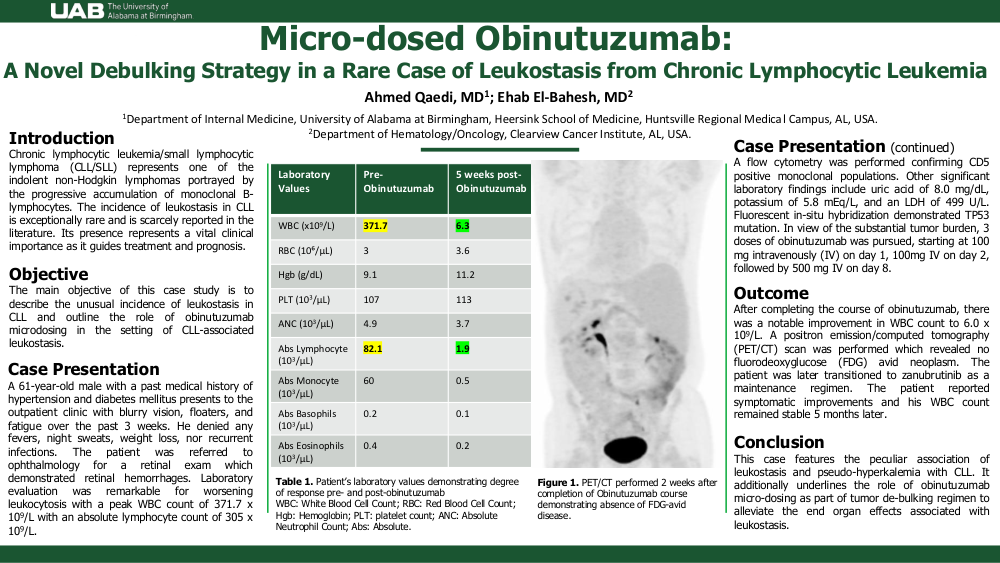
Case Presentation: A 61-year-old male with a past medical history of hypertension and diabetes mellitus presents to the outpatient clinic with blurry vision, floaters, and fatigue over the past 3 weeks. He denied any fevers, night sweats, weight loss, nor recurrent infections. The patient was referred to ophthalmology for a retinal exam which demonstrated retinal hemorrhages. Laboratory evaluation was remarkable for worsening leukocytosis with a peak WBC count of 371.7 x 10⁹/L with an absolute lymphocyte count of 305 x 109/L. A flow cytometry was performed confirming CD5 positive monoclonal populations. Other significant laboratory findings include uric acid of 8.0 mg/dL, potassium of 5.8 mEq/L, and an LDH of 499 U/L. Fluorescent in-situ hybridization demonstrated TP53 mutation. In view of the substantial tumor burden, 3 doses of obinutuzumab was pursued, starting at 100 mg intravenously (IV) on day 1, 100mg IV on day 2, followed by 500 mg IV on day 8.
Outcome: After completing the course of obinutuzumab, there was a notable improvement in WBC count to 6.0 x 10⁹/L. A positron emission/computed tomography (PET/CT) scan was performed which revealed no fluorodeoxyglucose-avid neoplasm. The patient was later transitioned to zanubrutinib as a maintenance regimen. The patient reported symptomatic improvements and his WBC count remained stable 5 months later.
Conclusion: This case features the peculiar association of leukostasis and pseudo-hyperkalemia with CLL. It additionally underlines the role of obinutuzumab micro-dosing as part of tumor de-bulking regimen to alleviate the end organ effects associated with leukostasis.