1,267 posters, 47 videos, 13 topics, 4 sessions, 853 authors
ePostersLive by SciGen Technologies S.A. All rights reserved.
SOHO 2026 Annual Meeting
September 9 - 12, 2026 | George R. Brown Convention Center, Houston, Texas

CLL - 373
Real-World Molecular and Clinical Characteristics of CLL/SLL Patients in Baja California Sur, Mexico
Poster Presenter
Authors
Part of Topic
Chronic Lymphocytic Leukemia (CLL)
Real-World Molecular and Clinical Characteristics of CLL/SLL Patients in Baja California Sur, Mexico
Instituto Mexicano del Seguro Social, Hospital General Juan María Salvatierra, Médica del Cortés.
Avendaño Emmanuel, Sánchez Fátima, Garcilazo Alexia.
Background:
Data regarding the molecular and clinical characteristics of chronic lymphocytic leukemia/small lymphocytic lymphoma (CLL/SLL) in Northwestern Mexico remain limited. Regional epidemiologic and cytogenetic information is scarce, particularly in Baja California Sur, where access to molecular testing has historically been restricted.
Aims:
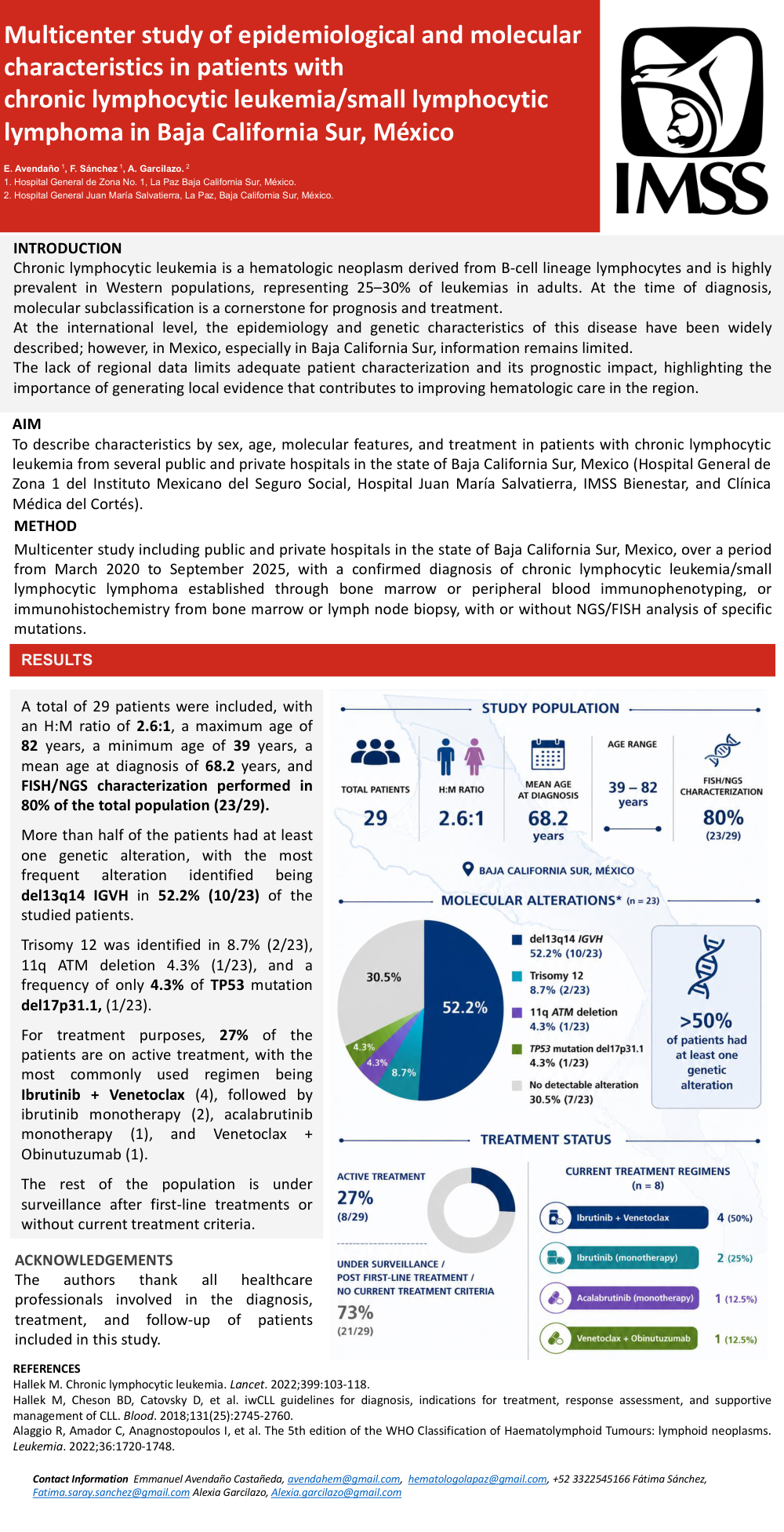
To describe the clinical, molecular, and treatment characteristics of patients diagnosed with CLL/SLL in a multicenter cohort from Baja California Sur, Mexico.
Methods:
This retrospective multicenter study included patients diagnosed with CLL/SLL between March 2020 and September 2025 across public and private hospitals in Baja California Sur, Mexico. Diagnosis was established through peripheral blood or bone marrow immunophenotyping and/or histopathologic evaluation of bone marrow or lymph node biopsy specimens. FISH and/or NGS analyses were reviewed when available.
Results:
A total of 29 patients were included, with a male predominance (male:female ratio 2.6:1). Median age at diagnosis was 68 years (range 39–82). Molecular characterization by FISH/NGS was available in 80% of patients (23/29). At least one cytogenetic alteration was identified in more than half of evaluated cases. The most frequent abnormality was del(13q14), present in 52.2% (12/23), followed by trisomy 12 in 8.7% (2/23). ATM deletion and TP53 alteration were each identified in 4.3% (1/23) of patients.
Twenty-seven percent of patients required active treatment. Targeted therapies predominated and included ibrutinib plus venetoclax, ibrutinib monotherapy, and venetoclax-obinutuzumab combinations. Most patients remained under active surveillance or without current treatment criteria.
Conclusions:
This study represents the first multicenter molecular characterization of CLL/SLL patients in Baja California Sur, Mexico. Most patients demonstrated low- to intermediate-risk cytogenetic profiles with infrequent TP53 alterations. These findings highlight the growing implementation of molecular diagnostics and targeted therapies in regional hematologic practice and support the need for expanded real-world outcome data in Mexican patients with CLL/SLL.