1,267 posters, 47 videos, 13 topics, 4 sessions, 853 authors
ePostersLive by SciGen Technologies S.A. All rights reserved.
SOHO 2026 Annual Meeting
September 9 - 12, 2026 | George R. Brown Convention Center, Houston, Texas

CLL - 192
When Symptoms Speak Louder Than Disease: Discordance Between Patient-Reported Symptoms and Objective Progression in Relapsed CLL
Poster Presenter
Authors
Part of Topic
Chronic Lymphocytic Leukemia (CLL)
Background
Treatment initiation in chronic lymphocytic leukemia (CLL) is guided by established clinical criteria, including disease-related constitutional symptoms and objective evidence of progression. However, in the relapsed/refractory (R/R) setting, patient perception of symptoms and fear of disease progression may influence symptom reporting and treatment expectations. Recent advances in oral targeted therapies may further impact patient attitudes toward treatment initiation.
Aim
To evaluate the concordance between patient-reported constitutional symptoms and objective markers of active disease in patients with R/R CLL.
Methods
We conducted a review of 16 patients with previously treated CLL attending outpatient follow-up in Oncology Center, Mansoura University, Egypt. Clinical data were collected over a yearly follow-up, including:
- Reported constitutional symptoms (fatigue, night sweats)
- Hematological parameters
- Presence of lymphadenopathy or splenomegaly
Objective evidence of disease activity was assessed based on standard clinical evaluation.
Results
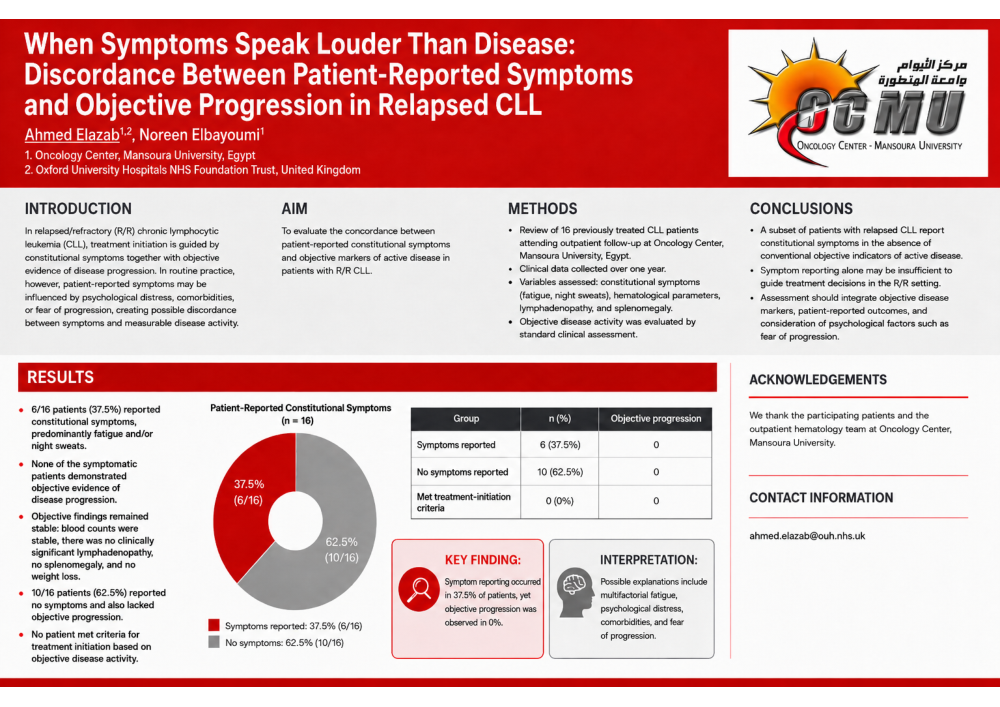
Six of 16 patients (37.5%) reported constitutional symptoms, predominantly fatigue and/or night sweats. None demonstrated objective evidence of disease progression, including stable blood counts , absence of clinically significant lymphadenopathy, and no splenomegaly or weight loss. The remaining 10 patients (62.5%) reported no symptoms and lacked objective progression. No patients met criteria for treatment initiation based on objective disease activity despite symptom reporting.
Discussion
Fatigue is a well-recognized and prevalent symptom in CLL, even outside clear disease progression, and may reflect multifactorial causes including psychological distress, comorbidities, or subclinical disease burden.
Emerging evidence suggests that patient-reported symptoms, particularly fatigue, may carry prognostic relevance, although their role in guiding treatment decisions remains unclear.
Additionally, illness perception and fear of progression have been shown to influence symptom burden and psychological distress in patients with relapsed CLL, potentially affecting symptom reporting.
Our findings highlight the complexity of interpreting constitutional symptoms in R/R CLL and suggest that reliance solely on subjective symptom reporting without objective corroboration may be insufficient to guide treatment decisions.
Conclusion
A subset of patients with relapsed CLL report constitutional symptoms in the absence of conventional objective indicators of active disease.
This discordance underscores the need for:
- Integrated assessment combining objective disease markers and patient-reported outcomes
- Consideration of psychological factors such as fear of progression