516 posters, 59 topics, 63 sessions, 1,127 authors, 353 institutions
ePostersLive by SciGen Technologies S.A. All rights reserved.
2026 SOAP Annual Meeting
April 29 - May 3, 2026 | Montreal, Quebec Canada

2341702
Suspected Amniotic Fluid Embolism During Vaginal Delivery of Dichorionic Diamniotic Twins Under Epidural Anesthesia
Poster Presenter
Authors
Affiliations
Part of Topic
OB EMERGENCIES
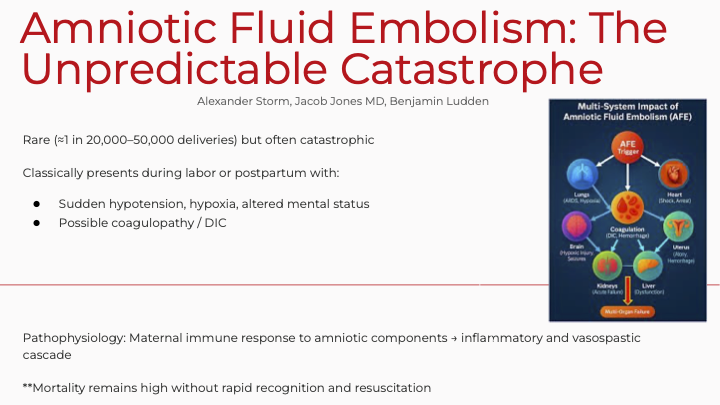
Amniotic Fluid Embolism: The Unpredictable Catastrophe Alexander Storm, Jacob Jones MD, Benjamin Ludden
Rare (≈1 in 20,000–50,000 deliveries) but often catastrophic
Classically presents during labor or postpartum with:
● Sudden hypotension, hypoxia, altered mental status
● Possible coagulopathy / DIC
Pathophysiology: Maternal immune response to amniotic components → inflammatory and vasospastic cascade
**Mortality remains high without rapid recognition and resuscitation
Case: Twin Delivery Complicated by Suspected AFE
● 30‑year‑old G‑DiDi pregnancy under
epidural, in OR for twin delivery
● After delivery of twin A → internal version for
breech twin B
● Abrupt bradycardia, hypotension, altered
mental status → suspected AFE
● Excluded anesthetic toxicity, PE,
hemorrhage
● A‑OK protocol initiated:
○ Atropine, Ondansetron, Ketorolac
■ Epinephrine, intubation,
supportive care
● Rapid emergency C‑section for twin B →
both neonates and mother recovered
● Extubated after 24 h in ICU, no neurologic
sequelae
Teaching Points & Takeaways
● Always suspect AFE with sudden hemodynamic or respiratory collapse during labor or delivery
● Diagnosis of exclusion: no definitive test
● Immediate supportive resuscitation = survival:
○ Airway control, oxygenation, vasoactive support
○ Consider A‑OK protocol to modulate cardiovascular reflexes ● Multidisciplinary readiness—OB, anesthesia, ICU, neonatology—is essential
● Successful outcomes hinge on team communication and rapid decision‑making
Recognize fast, act faster — that’s the difference in AFE.