516 posters, 59 topics, 63 sessions, 1,127 authors, 352 institutions
ePostersLive by SciGen Technologies S.A. All rights reserved.
2026 SOAP Annual Meeting
April 29 - May 3, 2026 | Montreal, Quebec Canada

2335449
Cesarean Delivery in a Patient with History of Unprovoked Spontaneous Coronary Artery Dissection
Poster Presenter
Authors
Affiliations
Part of Topic
OB EMERGENCIES
Cesarean Delivery in a Patient with History of Unprovoked Spontaneous Coronary Artery Dissection
BACKGROUND
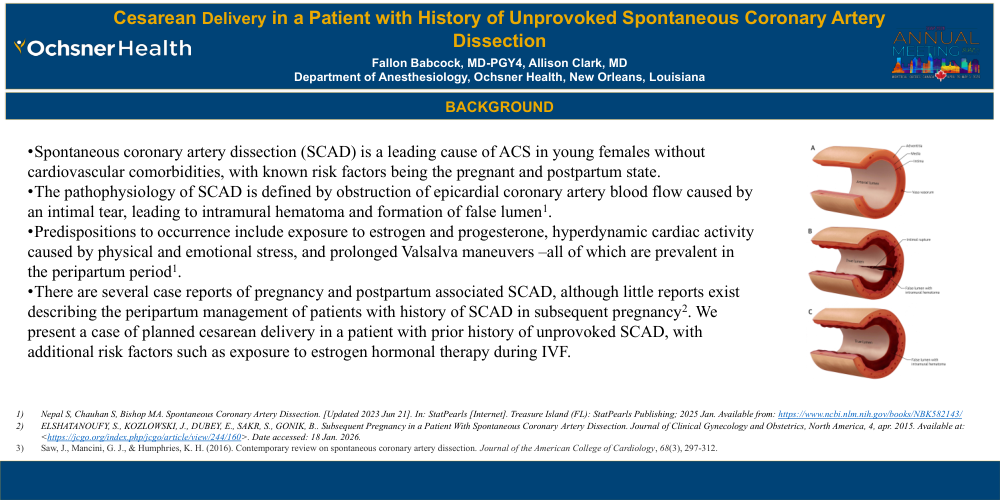
Spontaneous coronary artery dissection (SCAD) is a leading cause of ACS in young females without cardiovascular comorbidities, with known risk factors being the pregnant and postpartum state. The pathophysiology of SCAD is defined by obstruction of epicardial coronary artery blood flow caused by an intimal tear, leading to intramural hematoma and formation of false lumen1. Predispositions to occurrence include exposure to estrogen and progesterone, hyperdynamic cardiac activity caused by physical and emotional stress, and prolonged Valsalva maneuvers –all of which are prevalent in the peripartumperiod1. There are several case reports of pregnancy and postpartum associated SCAD, although little reports exist describing the peripartum management of patients with history of SCAD in subsequent pregnancy2. We present a case of planned cesarean delivery in a patient with prior history of unprovoked SCAD, with additional risk factors such as exposure to estrogen hormonal therapy during IVF.
CASE REPORT
33yo G1P0 female with PMH of anxiety, current IVF pregnancy and subclinical hyperthyroidism presented for scheduled primary low-transverse cesarean section (LTCS) for breech presentation. The patient had a history of unprovoked SCAD diagnosed at OSH in 2021, where she presented with left chest and shoulder pain with exertion, ST depressions and T wave inversions in anterior leads on EKG and elevated cardiac biomarkers (troponin and CK). Coronary angiography demonstrated SCAD w/ significant left main involvement, most severe in the proximal to mid- LAD segments with 80-85% stenosis. During this episode she was managed conservatively with aspirin, metoprolol, andisosorbide mononitrate for blood pressure control with reassuring repeat CT coronary imaging both while inpatient and 2 months s/p discharge. Aspirin and metoprolol were continued in pregnancy for prevention of recurrence. Prior to LTCS, neuraxial anesthetic was successfully achieved using a slowly dosed, combined spinal-epidural with 1mL intrathecal hyperbaric bupivacaine,10mcg fentanyl, and 100mcg preservative-free morphine followed by a total of 10mL 2% lidocaine with bicarbonate.Hypotension and tachycardia were avoided, and baseline hemodynamics maintained using fluid resuscitation and phenylephrine infusion. Additional analgesia was achieved via 30mg IV ketorolac. The patient underwent uneventful delivery of a vigorous infant without significant derangements in hemodynamics or cardiac symptoms. Post-operative recovery while inpatient was uncomplicated. Following discharge (on POD7) she was admitted for elevated blood pressures in absence of cardiac symptoms. This was effectively managed with amlodipine and close obstetric follow-up. She continued to have an uncomplicated postpartum course without SCAD recurrence.
DISCUSSION
SCAD is a well-documented cause of ACS in the young female population, especially in the peripartum period. Like most patients presenting with SCAD, our patient lacked cardiovascular risk factors. Importantly, this patient was at further increased risk of SCAD recurrence given diagnosis of anxiety and exposure to hormonal therapy through IVF. It is unknown whether this patient possessed other common predisposing factors, such as fibromuscular dysplasia. MRA was recommended but never completed. Despite increased risk and unknown status of the presence of underlying vasculopathy, she was able to undergo uneventful delivery without cardiac complication or SCAD recurrence. Her successful delivery was in part due to preventative medical therapy during pregnancy, as well as preemptive mitigation of known risk factors such as increased thoracic pressure secondary to pushing (Valsalva) or elevated cardiac hyperdynamic activity in response to pain or physical stress3.
REFERENCES