816 posters, 24 topics, 3,314 authors, 1,012 institutions
ePostersLive by SciGen Technologies S.A. All rights reserved.
SAGES 2026 Annual Meeting Emerging Technology Session
March 25-28, 2026 | Tampa, FL, USA

P225
PREDICTING THE RISK OF REVISION AFTER SLEEVE GASTRECTOMY USING PREOPERATIVELY IDENTIFIABLE GERD-RELATED RISK FACTORS
Poster Presenter
Part of Topic
Bariatric
Background:
While medical weight loss management is improving, bariatric surgery remains the most effective option for patients with class 3 (BMI 35–39.9) and class 4 (BMI ≥40) obesity, achieving far more durable weight loss than lifestyle or pharmacologic therapies1. Sleeve gastrectomy (SG) is the most common bariatric surgery performed in the United States, representing over 60% of annual bariatric procedures2.
However, recent literature demonstrates increased rates of gastroesophageal reflux disease (GERD) after SG, with incidence of de novo GERD approaching 40% and long‑term studies showing significantly higher rates of erosive esophagitis, hiatal hernia, and even de novo Barrett’s esophagus. In many cases, persistent or worsening reflux necessitates revisional surgery3. This study aims to assess whether pre‑operatively identified GERD‑related diagnoses are predictive of the need for revisional surgery following SG.
Methods:
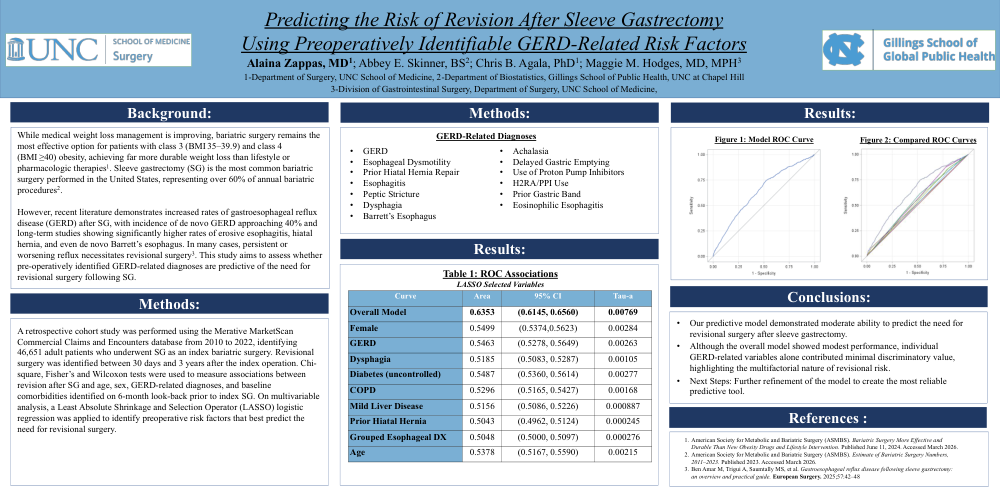
A retrospective cohort study was performed using the MerativeMarketScan Commercial Claims and Encounters database from 2010 to 2022, identifying 46,651 adult patients who underwent SG as an index bariatric surgery. Revisional surgery was identified between 30 days and 3 years after the index operation. Chi-square, Fisher’s and Wilcoxon tests were used to measure associations between revision after SG and age, sex, GERD-related diagnoses, and baseline comorbidities identified on 6-month look-back prior to index SG. On multivariable analysis, a Least Absolute Shrinkage and Selection Operator (LASSO) logistic regression was applied to identify preoperative risk factors that best predict the need for revisional surgery.
Conclusions: