875 posters, 25 topics, 3,440 authors, 1,061 institutions
ePostersLive by SciGen Technologies S.A. All rights reserved.
SAGES 2026 Annual Meeting Emerging Technology Session
March 25-28, 2026 | Tampa, FL, USA

P130
Diagnostic Efficacy of Imaging versus Non-Imaging Methods in Adult Gallstone-Related Acute Pancreatitis: A Meta-Analysis of Randomized Clinical Trials and Observational Studies
Poster Presenter
Part of Topic
Acute Care
Background:
Early risk stratification in gallstone-related acute pancreatitis (GAP) guides the use of endoscopic retrograde cholangiopancreatography (ERCP), yet the comparative effectiveness of imaging-based versus biochemical/clinical strategies remains uncertain.
Methods:
• PRISMA-guided systematic review and meta-analysis
• PubMed, Embase, Cochrane, and Scopus searched
• Adults with GAP undergoing pre-ERCP risk stratification
• Imaging-based vs biochemical/clinical pathways compared
• Random-effects model used to calculate pooled RR (95% CI)
• PROSPERO registered (CRD420251137132)
Results:
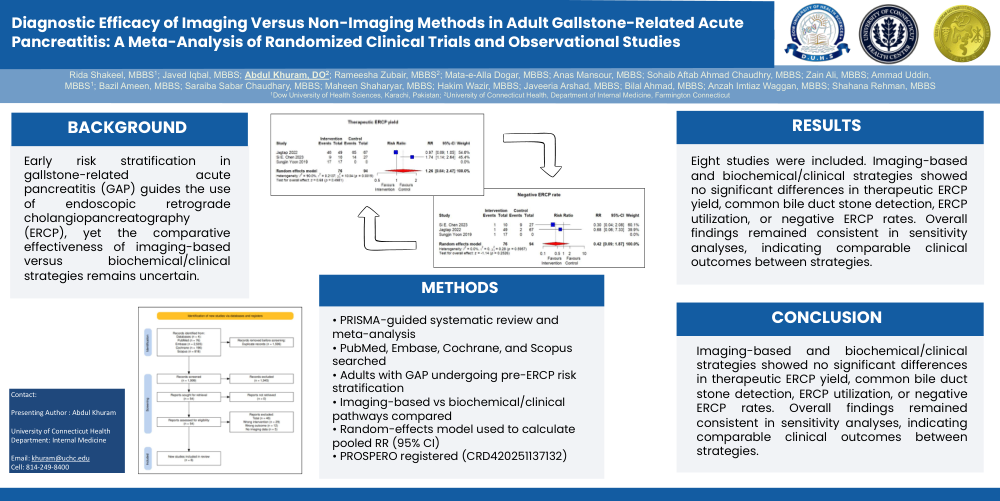
Eight studies were included. Imaging-based and biochemical/clinical strategies showed no significant differences in therapeutic ERCP yield, common bile duct stone detection, ERCP utilization, or negative ERCP rates. Overall findings remained consistent in sensitivity analyses, indicating comparable clinical outcomes between strategies.
Conclusions:
Imaging-based and biochemical/clinical strategies showed no significant differences in therapeutic ERCP yield, common bile duct stone detection, ERCP utilization, or negative ERCP rates. Overall findings remained consistent in sensitivity analyses, indicating comparable clinical outcomes between strategies.