2,281 posters, 63 videos, 56 audios, 43 topics, 18 sessions, 6,174 authors, 2,323 institutions
ePostersLive by SciGen Technologies S.A. All rights reserved.
RCOG World Congress 2025
June 23 - 25, 2025 | ExCeL London, UK
EP.0850
The Unexpected Twist: From Ectopic Pregnancy Suspicion to Choriocarcinoma Diagnosis
Poster Presenter
Authors
Affiliations
Part of Topic
Gynaecological oncology
INTRODUCTION
CASE PRESENTATION
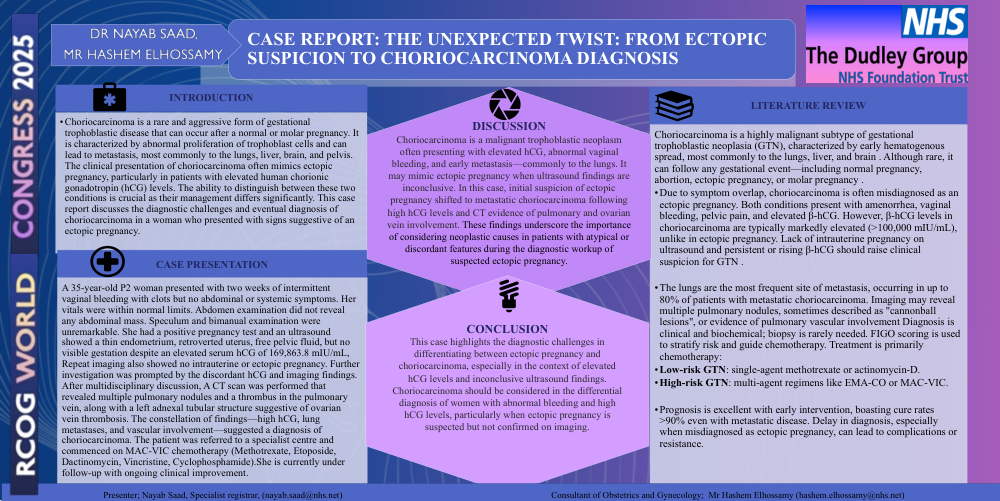
A 35-year-old P2 woman presented with two weeks of intermittent vaginal bleeding with clots but no abdominal or systemic symptoms. Her vitals were within normal limits. Abdomen examination did not reveal any abdominal mass. Speculum and bimanual examination were unremarkable. She had a positive pregnancy testand an ultrasound showed a thin endometrium, retroverted uterus, free pelvic fluid, but no visible gestation despite an elevated serum hCG of 169,863.8 mIU/mL, Repeat imaging also showed no intrauterine or ectopic pregnancy. Further investigation was prompted by the discordant hCG and imaging findings. After multidisciplinary discussion, A CT scan was performed that revealed multiple pulmonary nodules and a thrombus in the pulmonary vein, along with a left adnexal tubular structure suggestive of ovarian vein thrombosis. The constellation of findings—high hCG, lung metastases, and vascular involvement—suggested a diagnosis of choriocarcinoma. The patient was referred to a specialist centre and commenced on MAC-VIC chemotherapy (Methotrexate, Etoposide, Dactinomycin, Vincristine, Cyclophosphamide).She is currently under follow-up with ongoing clinical improvement.
DISCUSSION
Choriocarcinoma is a malignant trophoblastic neoplasm often presenting with elevated hCG, abnormal vaginal bleeding, and early metastasis—commonly to the lungs. It may mimic ectopic pregnancy when ultrasound findings are inconclusive. In this case, initial suspicion of ectopic pregnancy shifted to metastatic choriocarcinoma following high hCG levels and CT evidence of pulmonary and ovarian vein involvement. These findings underscore the importance of considering neoplastic causes in patients with atypical or discordant features during the diagnostic workup of suspected ectopic pregnancy.
CONCLUSION
This case highlights the diagnostic challenges in differentiating between ectopic pregnancy and choriocarcinoma, especially in the context of elevated hCG levels and inconclusive ultrasound findings. Choriocarcinoma should be considered in the differential diagnosis of women with abnormal bleeding and high hCG levels, particularly when ectopic pregnancy is suspected but not confirmed on imaging.
LITERATURE REVIEW
Choriocarcinoma is a highly malignant subtype of gestational trophoblastic neoplasia (GTN), characterized by early hematogenous spread, most commonly to the lungs, liver, and brain . Although rare, it can follow any gestational event—including normal pregnancy, abortion, ectopic pregnancy, or molar pregnancy .