2,281 posters, 63 videos, 56 audios, 43 topics, 18 sessions, 6,174 authors, 2,323 institutions
ePostersLive by SciGen Technologies S.A. All rights reserved.
RCOG World Congress 2025
June 23 - 25, 2025 | ExCeL London, UK
EP.0743
Diagnosing Endometrial Cancer: Can 1.0mm make a difference?
Poster Presenter
Authors
Affiliations
Part of Topic
Gynaecological oncology
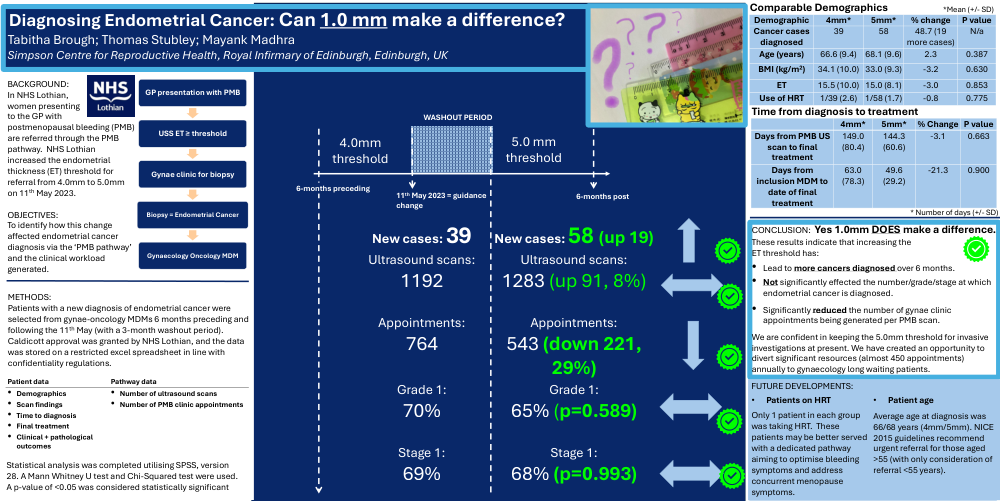
Diagnosing Endometrial Cancer: Can 1.0 mm make a difference?
Tabitha Brough; Thomas Stubley; Mayank Madhra
Simpson Centre for Reproductive Health, Royal Infirmary of Edinburgh, Edinburgh, UK
BACKGROUND:
In NHS Lothian,
women presenting
to the GP with
postmenopausal bleeding (PMB) are referred through the PMB pathway. NHS Lothian increased the endometrial thickness (ET) threshold for referral from 4.0mm to 5.0mm on 11th May 2023.
OBJECTIVES:
To identify how this change affected endometrial cancer diagnosis via the ‘PMB pathway’ and the clinical workload generated.
METHODS:
Patients with a new diagnosis of endometrial cancer were selected from gynae-oncology MDMs 6 months preceding and following the 11th May (with a 3-month washout period). Caldicott approval was granted by NHS Lothian, and the data was stored on a restricted excel spreadsheet in line with confidentiality regulations.
Statistical analysis was completed utilising SPSS, version 28. A Mann Whitney U test and Chi-Squared test were used. A p-value of <0.05 was considered statistically significant
CONCLUSION: Yes 1.0mm DOES make a difference.
These results indicate that increasing the
ET threshold has:
We are confident in keeping the 5.0mm threshold for invasive investigations at present. We have created an opportunity to divert significant resources (almost 450 appointments) annually to gynaecology long waiting patients.
FUTURE DEVELOPMENTS:
Only 1 patient in each group was taking HRT. These patients may be better served with a dedicated pathway aiming to optimise bleeding symptoms and address concurrent menopause symptoms.
Average age at diagnosis was 66/68 years (4mm/5mm). NICE 2015 guidelines recommend urgent referral for those aged >55 (with only consideration of referral <55 years).