2,281 posters, 63 videos, 56 audios, 43 topics, 18 sessions, 6,174 authors, 2,323 institutions
ePostersLive by SciGen Technologies S.A. All rights reserved.
RCOG World Congress 2025
June 23 - 25, 2025 | ExCeL London, UK
EP.0601
Progesterone Hypersensitivity (PH): A Diagnostic and Therapeutic Challenge
Poster Presenter
Part of Topic
General gynaecology
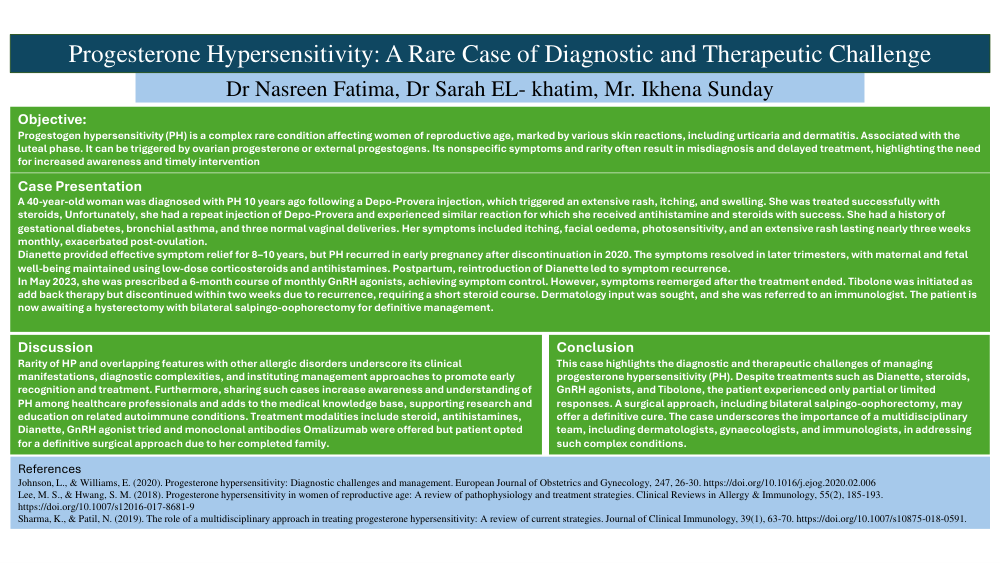
Progesterone Hypersensitivity: A Rare Case of Diagnostic and Therapeutic Challenge
Objective:
Progestogen hypersensitivity (PH) is a complex rare condition affecting women of reproductive age, marked by various skin reactions, including urticaria and dermatitis. Associated with the
luteal phase. It can be triggered by ovarian progesterone or external progestogens. Its nonspecific symptoms and rarity often result in misdiagnosis and delayed treatment, highlighting the need
for increased awareness and timely intervention
Case Presentation
A 40-year-old woman was diagnosed with PH 10 years ago following a Depo-Provera injection, which triggered an extensive rash, itching, and swelling. She was treated successfully with
steroids, Unfortunately, she had a repeat injection of Depo-Provera and experienced similar reaction for which she received antihistamine and steroids with success. She had a history of
gestational diabetes, bronchial asthma, and three normal vaginal deliveries. Her symptoms included itching, facial oedema, photosensitivity, and an extensive rash lasting nearly three weeks
monthly, exacerbated post-ovulation.
Dianette provided effective symptom relief for 8–10 years, but PH recurred in early pregnancy after discontinuation in 2020. The symptoms resolved in later trimesters, with maternal and fetal
well-being maintained using low-dose corticosteroids and antihistamines. Postpartum, reintroduction of Dianette led to symptom recurrence.
In May 2023, she was prescribed a 6-month course of monthly GnRH agonists, achieving symptom control. However, symptoms reemerged after the treatment ended. Tibolone was initiated as
add back therapy but discontinued within two weeks due to recurrence, requiring a short steroid course. Dermatology input was sought, and she was referred to an immunologist. The patient is
now awaiting a hysterectomy with bilateral salpingo-oophorectomy for definitive management.
Discussion
Rarity of HP and overlapping features with other allergic disorders underscore its clinical
manifestations, diagnostic complexities, and instituting management approaches to promote early
recognition and treatment. Furthermore, sharing such cases increase awareness and understanding of
PH among healthcare professionals and adds to the medical knowledge base, supporting research and
education on related autoimmune conditions. Treatment modalities include steroid, antihistamines,
Dianette, GnRH agonist tried and monoclonal antibodies Omalizumab were offered but patient opted
for a definitive surgical approach due to her completed family.
Conclusion
This case highlights the diagnostic and therapeutic challenges of managing
progesterone hypersensitivity (PH). Despite treatments such as Dianette, steroids,
GnRH agonists, and Tibolone, the patient experienced only partial or limited
responses. A surgical approach, including bilateral salpingo-oophorectomy, may
offer a definitive cure. The case underscores the importance of a multidisciplinary
team, including dermatologists, gynaecologists, and immunologists, in addressing
such complex conditions.
References
Johnson, L., & Williams, E. (2020). Progesterone hypersensitivity: Diagnostic challenges and management. European Journal of Obstetrics and Gynecology, 247, 26-30. https://doi.org/10.1016/j.ejog.2020.02.006
Lee, M. S., & Hwang, S. M. (2018). Progesterone hypersensitivity in women of reproductive age: A review of pathophysiology and treatment strategies. Clinical Reviews in Allergy & Immunology, 55(2), 185-193.
https://doi.org/10.1007/s12016-017-8681-9
Sharma, K., & Patil, N. (2019). The role of a multidisciplinary approach in treating progesterone hypersensitivity: A review of current strategies. Journal of Clinical Immunology, 39(1), 63-70. https://doi.org/10.1007/s10875-018-0591.