2,281 posters, 63 videos, 56 audios, 43 topics, 18 sessions, 6,174 authors, 2,323 institutions
ePostersLive by SciGen Technologies S.A. All rights reserved.
RCOG World Congress 2025
June 23 - 25, 2025 | ExCeL London, UK
EP.0498
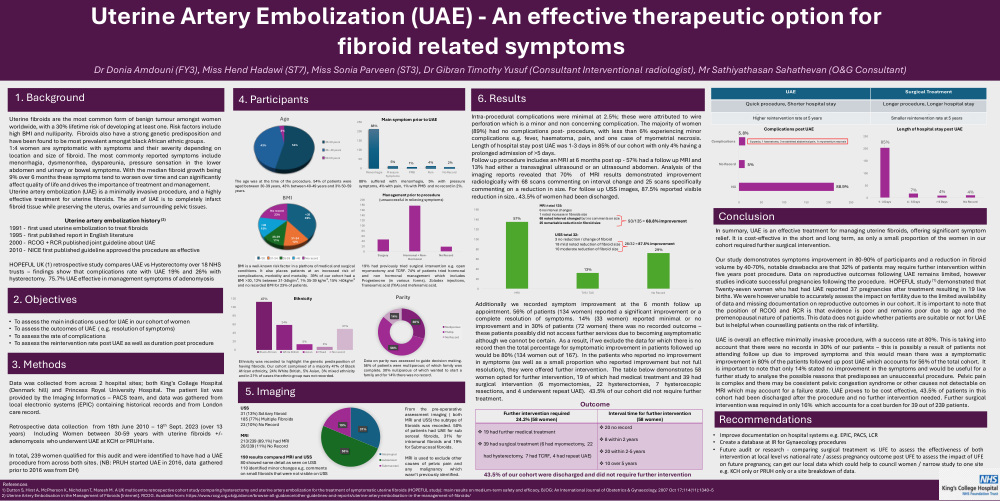
Uterine artery embolization (UAE), an effective therapeutic option for fibroid-related symptoms
Part of Topic
General gynaecology
Uterine fibroids are the most common form of benign tumour amongst women worldwide, with a 30% lifetime risk of developing at least one. Risk factors include high BMIand nulliparity. Fibroids also have a strong genetic predisposition and have been found to be most prevalentamongst black African ethnic groups.
1:4 women are symptomatic with symptoms and their severity depending on location and size of fibroid. The most commonly reported symptoms include menorrhagia, dysmenorrhea, dyspareunia, pressure sensation in the lower abdomen and urinary or bowel symptoms. With the median fibroid growth being 9% over 6 months these symptoms tend to worsen over time and can significantly affect quality of life and drives the importance of treatment and management.
Uterine artery embolization (UAE) is a minimally invasive procedure, and a highly effective treatment for uterine fibroids. The aim of UAE is to completely infarct fibroid tissue while preserving the uterus, ovaries and surrounding pelvic tissues.
Uterine artery embolization history (2)
1991 - first used uterine embolization to treat fibroids
1995 - first published report in English literature
2000 - RCOG + RCR published joint guideline about UAE
2010 - NICE first published guideline approved the procedure as effective
HOPEFUL UK (1) retrospective study compares UAE vs Hysterectomy over 18 NHS trusts – findings show that complications rate with UAE 19% and 26% with hysterectomy. 75.7% UAE effective in management symptoms of adenomyosis
Data was collected from across 2 hospital sites; both King's College Hospital (Denmark hill) and Princess Royal University Hospital. The patient list was provided by the Imaging Informatics – PACS team, and data was gathered from local electronic systems (EPIC) containing historical records and from London care record.
Retrospective data collection from 18th June 2010 – 18thSept. 2023 (over 13 years) Including Women between 30-59 years with uterine fibroids +/- adenomyosis who underwent UAE at KCH or PRUH site. Patient list was provided by Imaging Informatics – PACS Team.
In total, 239 women qualified for this audit and were identified to have had a UAE procedure from across both sites. (NB: PRUH started UAE in 2016, data gathered prior to 2016 was from DH)
Intra-procedural complications were minimal at 2.5%; these were attributed to wire perforation which is a minor and non concerning complication. The majority of women (89%) had no complications post- procedure, with less than 6% experiencing minor complications e.g. fever, haematoma, pain, and one case of uterine artery necrosis. Length of hospital stay post UAE was 1-3 days in 85% of our cohort with only 4% having a prolonged admission of >5 days.
Follow up procedure includes an MRI at 6 months post op -57% had a follow up MRI and 13% had either a transvaginal ultrasound or an ultrasound abdomen. Analysis of the imaging reports revealed that 70% of MRI resultsdemonstrated improvement radiologically with 68 scans commenting on interval change and 25 scans specificallycommenting on a reduction in size. For follow up USS images, 87.5% reported visible reduction in size.. 43.5% of women had been discharged.
In summary, UAE is an effective treatment for managing uterine fibroids, offering significant symptom relief. It is cost-effective in the short and long term, as only a small proportion of the women in our cohort required further surgical intervention.
Our study demonstrates symptoms improvement in 80-90% of participants and a reduction in fibroid volume by 40-70%, notable drawbacks are that 32% of patients may require further intervention within five years post procedure. Data on reproductive outcomes following UAE remains limited, however studies indicate successful pregnancies following the procedure. HOPEFUL study (1) demonstrated that Twenty-seven women who had had UAE reported 37 pregnancies after treatment resulting in 19 live births. We were however unable to accurately assess the impact on fertility due to the limited availability of data and missing documentation on reproductive outcomes in our cohort. It is important to note that the position of RCOG and RCR is that evidence is poor and remains poor due to age and the premenopausal nature of patients. This data does not guide whether patients are suitable or not for UAE but is helpful when counselling patients on the risk of infertility.