2,281 posters, 63 videos, 56 audios, 43 topics, 18 sessions, 6,174 authors, 2,323 institutions
ePostersLive by SciGen Technologies S.A. All rights reserved.
RCOG World Congress 2025
June 23 - 25, 2025 | ExCeL London, UK
EP.0568
Atypical Presentation of Pelvic Inflammatory Disease (PID)
Poster Presenter
Part of Topic
General gynaecology
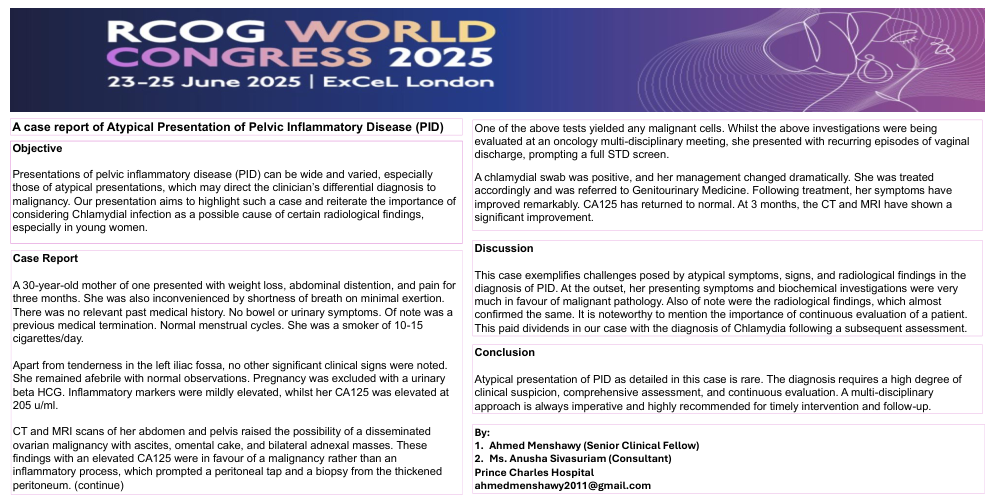
A case report of Atypical Presentation of Pelvic Inflammatory Disease (PID)
Objective:
Presentations of pelvic inflammatory disease (PID) can be wide and varied, especially those of atypical presentations, which may direct the clinician’s differential to malignancy. Our presentation aims to highlight such a case and reiterate the importance of considering Chlamydial infection as a possible cause for certain radiological findings, especially in young women.
Case Report:
A 30-year-old mother of one presented with weight loss, abdominal distention, and pain for three months. She was also inconvenienced by shortness of breath on minimal exertion. There was no relevant past history. No bowel or urinary symptoms. Of note was a previous medical termination. Normal menstrual cycles. She was a smoker of 10-15 cigarettes/day.
Apart from tenderness in the left iliac fossa, no other significant clinical signs were noted. She remained apyrexial with normal observations. Pregnancy was excluded with a urinary beta HCG. Inflammatory markers were mildly elevated, whilst her CA125 was elevated at 205 u/ml.
CT and MRI scans of her abdomen and pelvis raised the possibility of a disseminated ovarian malignancy with ascites, omental cake, and bilateral adnexal masses. These findings with an elevated CA125 were in favour of a malignancy rather than an inflammatory process which prompted a peritoneal tap and a biopsy from the thickened peritoneum.
None of the above yielded any malignant cells. Whilst the above investigations were being evaluated at an oncology multi-disciplinary meeting, she presented with recurring episodes of vaginal discharge, prompting a full STD screen. A chlamydial swab was positive, and her management changed dramatically. She was treated accordingly and was referred to Genito Urinary Medicine.
Following treatment, her symptoms have improved remarkably. CA125 has returned to normal. At 3 months the CT and MRI have shown a significant improvement.
Discussion:
This case exemplifies challenges posed by atypical symptoms, signs, and radiological findings in the diagnosis of PID. At the outset, her presenting symptoms and biochemical investigations were very much in favour of malignant pathology. Also of note were the radiological findings, which almost confirmed the same.
It is noteworthy to mention the importance of continuous evaluation of a patient. This paid dividends in our case with the diagnosis of Chlamydia following a subsequent assessment.
Conclusion:
Atypical presentation of PID as detailed in this case is rare. The diagnosis requires a high degree of clinical suspicion, comprehensive assessment, and continuous evaluation. A multi-disciplinary approach is always imperative and highly recommended for timely intervention and follow-up.