2,281 posters, 63 videos, 56 audios, 43 topics, 18 sessions, 6,174 authors, 2,323 institutions
ePostersLive by SciGen Technologies S.A. All rights reserved.
RCOG World Congress 2025
June 23 - 25, 2025 | ExCeL London, UK
EP.0565
Non-sexually-transmitted Tubo-ovarian Abscess from Edwardsiella tarda: A Case Report & Review of Literature
Poster Presenter
Part of Topic
General gynaecology
Non-sexually Transmitted Tubo-ovarian Abscess from Edwardsiella tarda: A Case Report & Review of Literature
Objectives
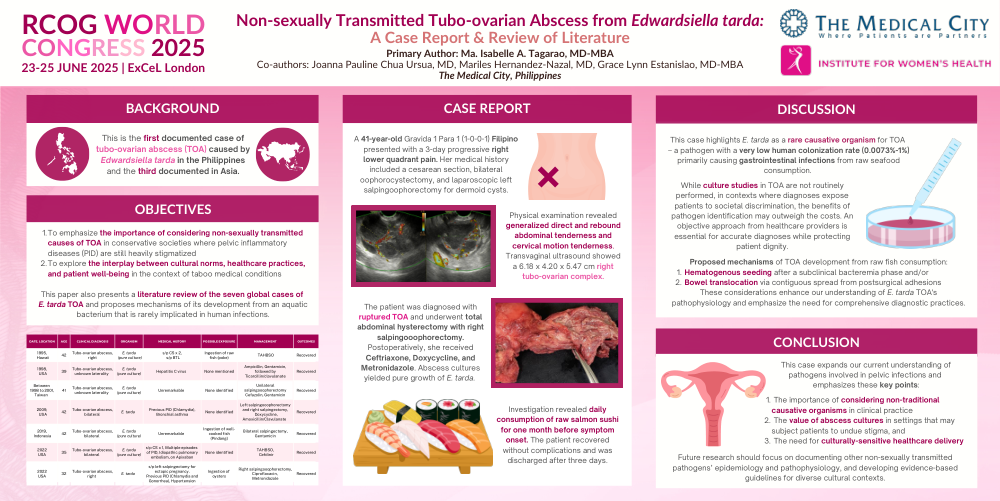
As the first documented case of tubo-ovarian abscess (TOA) caused by Edwardsiella tarda in the Philippines and the third in Asia, this report (1) emphasizes the importance of considering non-sexually-transmitted causes of TOA in conservative societies where pelvic inflammatory diseases (PID) are still heavily stigmatized, and (2) explores the interplay between cultural norms, healthcare practices, and patient well-being in the context of taboo medical conditions. This paper includes a literature review of the seven global cases of E. tarda TOA and proposes mechanisms of its development from an aquatic bacterium rarely implicated in human infections.
Case Report
A 41-year-old Gravida 1 Para 1 (1-0-0-1) Filipino presented with a 3-day progressive right lower quadrant pain. Her medical history included a cesarean section, bilateral oophorocystectomy, and laparoscopic left salpingoophorectomy for dermoid cysts. Physical examination revealed generalized direct and rebound abdominal tenderness and cervical motion tenderness. Transvaginal ultrasound showed a 6.18 x 4.20 x 5.47 cm right tubo-ovarian complex. The patient was diagnosed with ruptured TOA and underwent total abdominal hysterectomy with right salpingooophorectomy. Postoperatively, she received Ceftriaxone, Doxycycline, and Metronidazole. Abscess cultures yielded pure growth of E. tarda. Investigation revealed daily consumption of raw salmon sushi for one month before symptom onset. The patient recovered without complications and was discharged after three days.
Discussion
This case highlights E. tarda as a rare causative organism for TOA – a pathogen with a low human colonization rate (0.0073%-1%) primarily causing gastrointestinal infections from raw seafood consumption. While culture studies in TOA are not routinely performed, in contexts where diagnoses expose patients to societal discrimination, the benefits of pathogen identification may outweigh the costs. An objective approach from healthcare providers is essential for accurate diagnoses while protecting patient dignity.
Proposed mechanisms of TOA development from raw fish consumption include hematogenous seeding after a subclinical bacteremia phase and/or bowel translocation via contiguous spread from postsurgical adhesions. These considerations enhance our understanding of E. tarda TOA's pathophysiology and emphasize the need for comprehensive diagnostic practices.
Conclusion
This case expands our current understanding of pathogens involved in pelvic infections and emphasizes these key points: (1) the importance of considering non-traditional causative organisms in clinical practice, (2) the value of abscess cultures in settings that may subject patients to undue stigma, and (3) the need for culturally-sensitive healthcare delivery. Future research should focus on documenting other non-sexually transmitted pathogens’ epidemiology and pathophysiology, and developing evidence-based guidelines for diverse cultural contexts.