2,281 posters, 63 videos, 56 audios, 43 topics, 18 sessions, 6,174 authors, 2,323 institutions
ePostersLive by SciGen Technologies S.A. All rights reserved.
RCOG World Congress 2025
June 23 - 25, 2025 | ExCeL London, UK
EP.0543
A Massive 20kg Uterine Fibroid: Myomectomy or Hysterectomy?
Part of Topic
General gynaecology
TITLE: Surgical management of a massive 20kg uterine fibroid – myomectomy or hysterectomy?
Authors: Miss Sarah Atalla, Mr Stuart Quek, Mr Rami Atalla (Chelsea & Westminster Hospital, London. Lister Hospital, Stevenage.)
Objective: This is a rare case involving a 37-year-old nulliparous Afro-Caribbean woman who presented with a 20kg fibroid and underwent hysterectomy.
Case Report: A 37-year-old woman presented with a two year history of worsening abdominal distension, dysmenorrhoea and menorrhagia. Clinical examination confirmed a large solid mass extending from the pelvis to the xiphisternum. MRI showed a large pelvic mass which was likely uterine fibroid but the right ovary was not clearly visualised. The Ca125 was elevated at 203U/ml. Her case was discussed at MDT and it was felt that due to the rapid growth of the mass and inconclusive investigation findings, a hysterectomy should be recommended. She was consented for total abdominal hysterectomy +/- oophorectomy in the event of abnormal appearance of the ovary at the time of surgery. Pre-op Hb was 10.3g/dL, she was cross-matched 4 units of red cells.
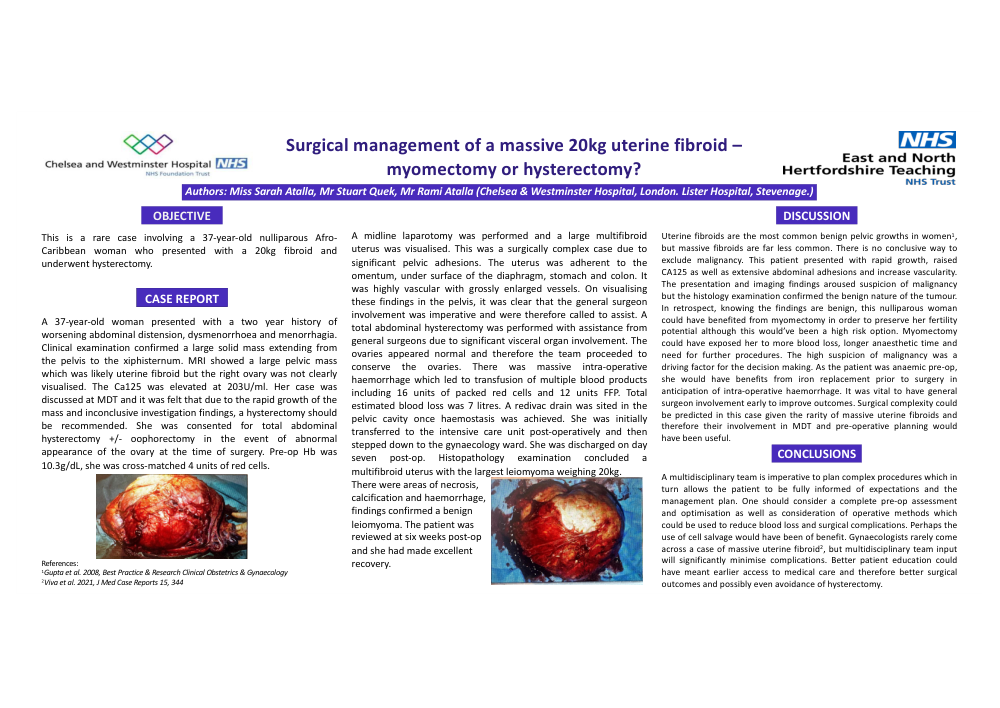
A midline laparotomy was performed and a large multifibroid uterus was visualised. This was a surgically complex case due to significant pelvic adhesions. The uterus was adherent to the omentum, under surface of the diaphragm, stomach and colon. It was highly vascular with grossly enlarged vessels. On visualising these findings in the pelvis, it was clear that the general surgeon involvement was imperative and were therefore called to assist. A total abdominal hysterectomy was performed with assistance from general surgeons due to significant visceral organ involvement. The ovaries appeared normal and therefore the team proceeded to conserve the ovaries. There was massive intra-operative haemorrhage which led to transfusion of multiple blood products including 16 units of packed red cells and 12 units FFP. Total estimated blood loss was 7 litres. A redivac drain was sited in the pelvic cavity once haemostasis was achieved. She was initially transferred to the intensive care unit post-operatively and then stepped down to the gynaecology ward. She was discharged on day seven post-op. Histopathology examination concluded a multifibroid uterus with the largest leiomyoma weighing 20kg. There were areas of necrosis, calcification and haemorrhage, findings confirmed a benign leiomyoma. The patient was reviewed at six weeks post-op and she had made excellent recovery.
Discussion: Uterine fibroids are the most common benign pelvic growths in women1, but massive fibroids are far less common. There is no conclusive way to exclude malignancy. This patient presented with rapid growth, raised CA125 as well as extensive abdominal adhesions and increase vascularity. The presentation and imaging findings aroused suspicion of malignancy but the histology examination confirmed the benign nature of the tumour. In retrospect, knowing the findings are benign, this nulliparous woman could have benefited from myomectomy in order to preserve her fertility potential although this would’ve been a high risk option. Myomectomy could have exposed her to more blood loss, longer anaesthetic time and need for further procedures. The high suspicion of malignancy was a driving factor for the decision making. As the patient was anaemic pre-op, she would have benefits from iron replacement prior to surgery in anticipation of intra-operative haemorrhage. It was vital to have general surgeon involvement early to improve outcomes. Surgical complexity could be predicted in this case given the rarity of massive uterine fibroids and therefore their involvement in MDT and pre-operative planning would have been useful.
Conclusions: A multidisciplinary team is imperative to plan complex procedures which in turn allows the patient to be fully informed of expectations and the management plan. One should consider a complete pre-op assessment and optimisation as well as consideration of operative methods which could be used to reduce blood loss and surgical complications. Perhaps the use of cell salvage would have been of benefit. Gynaecologists rarely come across a case of massive uterine fibroid2, but multidisciplinary team input will significantly minimise complications. Better patient education could have meant earlier access to medical care and therefore better surgical outcomes and possibly even avoidance of hysterectomy.