2,281 posters, 63 videos, 56 audios, 43 topics, 18 sessions, 6,174 authors, 2,323 institutions
ePostersLive by SciGen Technologies S.A. All rights reserved.
RCOG World Congress 2025
June 23 - 25, 2025 | ExCeL London, UK
EP.0481
Detection of Prune-belly syndrome by ultrasound in the first trimester
Poster Presenter
Authors
Nesrine Souayeh, Haithem Aloui, Bel Haj ALi Azza, Hadhami Rouis, Smida Hana, Chaouki Mbarki, Haje Bettaieb
Affiliations
Ben Arous Regional Hospital, Deprtment of gynecology and Obstetrics, Ben Arous regional hospital, gynecology and obstetrics department, university on Tunis elmanar, faculty of medicine, Ben Arous, University of Tunis el Manar, Faculty of Medicine, Ben Arous regional hospital, gynecology and obstetrics department,universityof Tunis elmanar, faculty of medicine, Ben Arous regional hospital, gynecology and obstetrics department, university of Tunis elmanar, faculty of medecine
Part of Topic
Fetal medicine
Introduction
Prune-Belly Syndrome (PBS) is a rare condition with a notable male predominance. It is characterized by a spectrum of anomalies, which can vary in severity, including the classic triad: aplasia or hypoplasia of the abdominal musculature, dilations of the urinary tract, and bilateral cryptorchidism. Diagnosis typically requires a radiological and clinical approach, underscoring the significance of first-trimester ultrasound for early detection.
Objective
The aim of this study is to demonstrate that early suspicion of Prune-Belly Syndrome (PBS) during pregnancy facilitates the identification of associated anomalies and provides a more accurate prognosis.
Method
This case report presents a fetus diagnosed with Prune-Belly Syndrome in the first trimester, with confirmation through fetal pathology following medical termination of the pregnancy.
Case Report
A 36-year-old woman, gravida 2, para 0, with no significant medical or surgical history, presented for evaluation at our department after her first pregnancy, which ended at 20 weeks due to trisomy 18. Both pregnancies were from a non-consanguineous relationship.
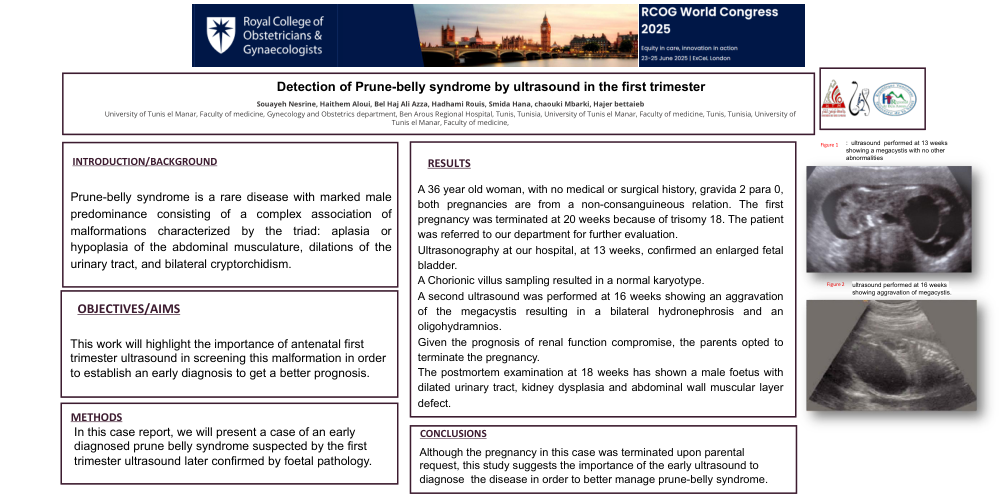
Ultrasonography at 13 weeks gestation revealed a megacystis, prompting referral for further evaluation. Chorionic villus sampling confirmed a normal karyotype. A follow-up ultrasound at 16 weeks showed worsening of the megacystis, resulting in bilateral hydronephrosis and oligohydramnios.
Given the anticipated renal dysfunction, the parents chose to terminate the pregnancy.
Postmortem examination at 18 weeks revealed a male fetus with a dilated urinary tract, kidney dysplasia, and a defect in the abdominal wall musculature.
Conclusion
Although the pregnancy in this case was terminated at the request of the parents, this study underscores the importance of early ultrasound detection in diagnosing Prune-Belly Syndrome. Early diagnosis facilitates better management and informed decision-making regarding prognosis and potential outcomes.