2,281 posters, 63 videos, 56 audios, 43 topics, 18 sessions, 6,174 authors, 2,323 institutions
ePostersLive by SciGen Technologies S.A. All rights reserved.
RCOG World Congress 2025
June 23 - 25, 2025 | ExCeL London, UK
EP.0463
Preterm birth prevention clinic outcomes
Poster Presenter
Part of Topic
Fetal medicine
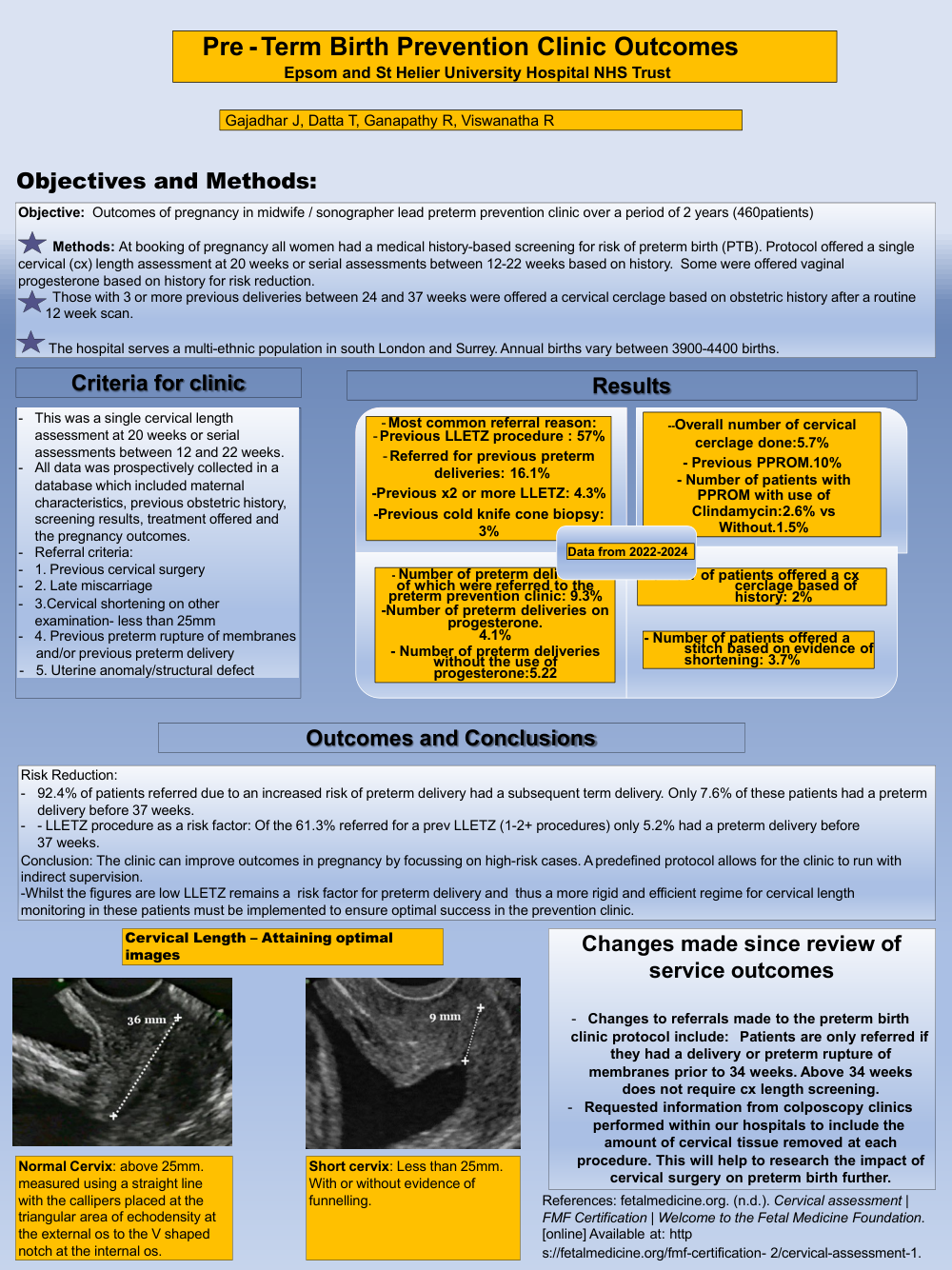
Pre - Term Birth Prevention Clinic Outcomes
Epsom and St Helier University Hospital NHS Trust
Objectives and Methods:
Objective: Outcomes of pregnancy in midwife / sonographer lead preterm prevention clinic over a period of 2 years (460patients)
Methods: At booking of pregnancy all women had a medical history-based screening for risk of preterm birth (PTB). Protocol offered a single cervical (cx) length assessment at 20 weeks or serial assessments between 12-22 weeks based on history. Some were offered vaginal progesterone based on history for risk reduction.
Those with 3 or more previous deliveries between 24 and 37 weeks were offered a cervical cerclage based on obstetric history after a routine
12 week scan.
The hospital serves a multi-ethnic population in south London and Surrey. Annual births vary between 3900-4400 births.
Criteria for clinic
This was a single cervical length assessment at 20 weeks or serial assessments between 12 and 22 weeks.
All data was prospectively collected in a
database which included maternal characteristics, previous obstetric history, screening results, treatment offered and the pregnancy outcomes.
Referral criteria:
1. Previous cervical surgery
2. Late miscarriage
3.Cervical shortening on other examination- less than 25mm
4. Previous preterm rupture of membranes
and/or previous preterm delivery
5. Uterine anomaly/structural defect
Results
Most common referral reason:
Previous LLETZ procedure : 57%
Referred for previous preterm deliveries: 16.1%
-Previous x2 or more LLETZ: 4.3%
-Previous cold knife cone biopsy: 3%
--Overall number of cervical cerclage done:5.7%
- Previous PPROM.10%
- Number of patients with
PPROM with use of
Clindamycin:2.6% vs
Without.1.5%
- Number of preterm deliveries of which were referred to the preterm prevention clinic: 9.3%
-Number of preterm deliveries on progesterone.
4.1%
- Number of preterm deliveries without the use of progesterone:5.22
-Number of patients offered a cx cerclage based of history: 2%
Number of patients offered a stitch based on evidence of shortening: 3.7%
Outcomes and Conclusions
Risk Reduction:
92.4% of patients referred due to an increased risk of preterm delivery had a subsequent term delivery. Only 7.6% of these patients had a preterm delivery before 37 weeks.
- LLETZ procedure as a risk factor: Of the 61.3% referred for a prev LLETZ (1-2+ procedures) only 5.2% had a preterm delivery before
37 weeks.
Conclusion: The clinic can improve outcomes in pregnancy by focussing on high-risk cases. A predefined protocol allows for the clinic to run with indirect supervision.
-Whilst the figures are low LLETZ remains a risk factor for preterm delivery and thus a more rigid and efficient regime for cervical length
monitoring in these patients must be implemented to ensure optimal success in the prevention clinic
Changes made since review of service outcomes
- Changes to referrals made to the preterm birth clinic protocol include: Patients are only referred if
they had a delivery or preterm rupture of membranes prior to 34 weeks. Above 34 weeks does not require cx length screening.
- Requested information from colposcopy clinics performed within our hospitals to include the
amount of cervical tissue removed at each procedure. This will help to research the impact of cervical surgery on preterm birth further.