2,281 posters, 63 videos, 56 audios, 43 topics, 18 sessions, 6,174 authors, 2,323 institutions
ePostersLive by SciGen Technologies S.A. All rights reserved.
RCOG World Congress 2025
June 23 - 25, 2025 | ExCeL London, UK
EP.0462
Impact of preterm birth prevention clinics on cervical cerclage
Poster Presenter
Part of Topic
Fetal medicine
Impact of preterm birth prevention clinics on cervical cerclage
Objective: : Impact of a dedicated preterm birth clinic on cervical cerclage in prevention of preterm birth
Methods: A retrospective analysis of the indication and outcomes of cervical cerclage in a population screened in the preterm birth prevention clinic.
Background: Preterm birth, defined as delivery prior to 37 completed weeks of gestation, is the leading cause of childhood mortality under the age of 5. Cerclage remains one of the standard options for prophylactic intervention in the care of women at risk of preterm birth and second trimester fetal loss and is used by most obstetricians, despite difficulties in identifying the population of women who would most benefit. The procedure involves a stitch inserted into cervical tissue in an attempt to prevent cervical shortening and subsequent second-trimester pregnancy loss or preterm delivery
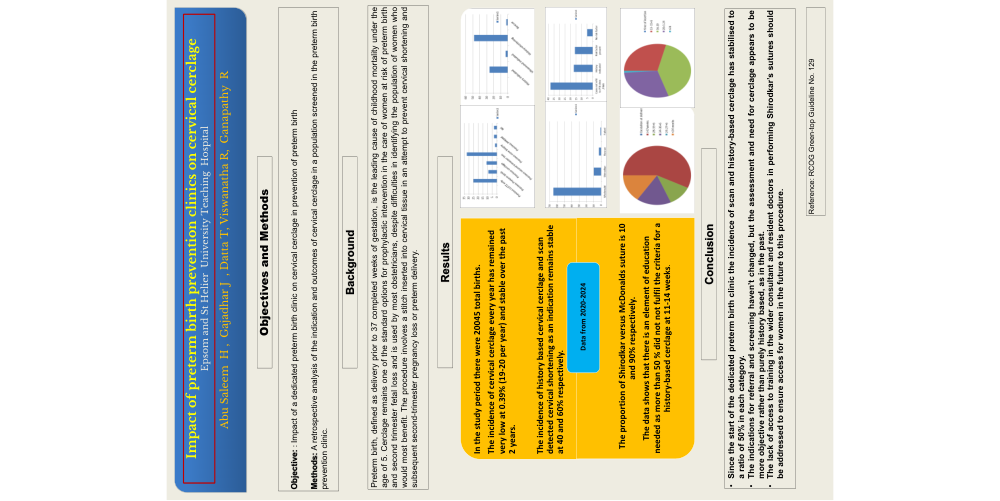
Results: In the study period there were 20045 total births. The incidence of cervical cerclage every year has remained very low at 0.39% (19-20 per year) and stable over the past 2 years. The incidence of history based cervical cerclage and scan detected cervical shortening as an indication remains stable at 40 and 60% respectively.
The proportion of Shirodkar versus McDonalds suture is 10 and 90% respectively. The data shows that there is an element of education needed as more than 50 % did not not fulfil the criteria for a history-based cerclage at 11-14 weeks
Conclusion: Since the start of the dedicated preterm birth clinic the incidence of scan and history-based cerclage has stabilised to a ratio of 50% in each category. • The indications for referral and screening haven’t changed, but the assessment and need for cerclage appears to be more objective rather than purely history based, as in the past. • The lack of access to training in the wider consultant and resident doctors in performing Shirodkar’s sutures should be addressed to ensure access for women in the future to this procedure