2,281 posters, 63 videos, 56 audios, 43 topics, 18 sessions, 6,174 authors, 2,323 institutions
ePostersLive by SciGen Technologies S.A. All rights reserved.
RCOG World Congress 2025
June 23 - 25, 2025 | ExCeL London, UK
EP.0457
Rapid Prenatal Exome Sequencing – Mapping services across East Midlands & East of England
Poster Presenter
Part of Topic
Fetal medicine
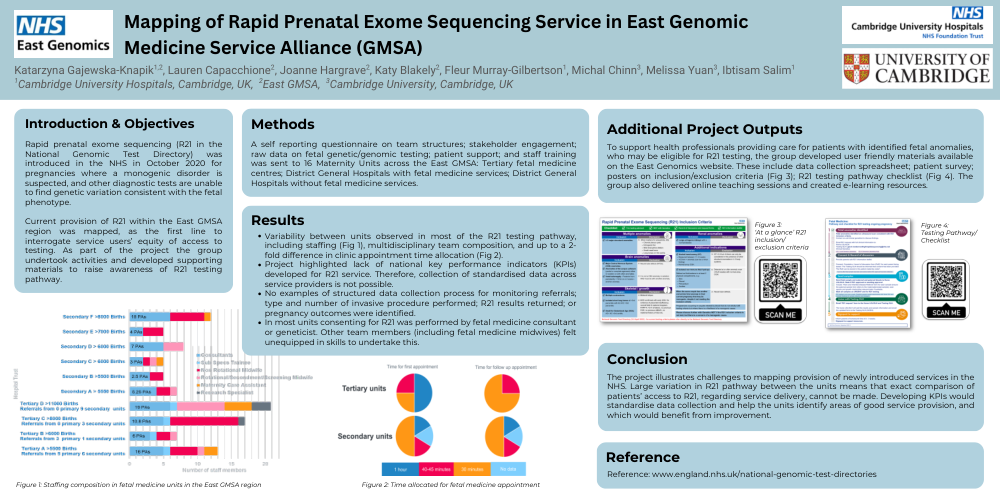
Mapping of Rapid Prenatal Exome Sequencing Service in East Genomic Medicine Service Alliance (GMSA)
Rapid prenatal exome sequencing (R21 in the National Genomic Test Directory) was introduced in the NHS in October 2020 for pregnancies where a monogenic disorder is suspected, and other diagnostic tests are unable to find genetic variation consistent with the fetal phenotype. Current provision of R21 within the East GMSA region was mapped, as the first line to interrogate service users’ equity of access to testing. As part of the project the group undertook activities and developed supporting materials to raise awareness of R21 testing pathway
Methods A self reporting questionnaire on team structures; stakeholder engagement; raw data on fetal genetic/genomic testing; patient support; and staff training was sent to 16 Maternity Units across the East GMSA: Tertiary fetal medicine centres; District General Hospitals with fetal medicine services; District General Hospitals without fetal medicine services
Results Variability between units observed in most of the R21 testing pathway, including staffing (Fig 1), multidisciplinary team composition, and up to a 2- fold difference in clinic appointment time allocation (Fig 2). Project highlighted lack of national key performance indicators (KPIs) developed for R21 service. Therefore, collection of standardised data across service providers is not possible. No examples of structured data collection process for monitoring referrals; type and number of invasive procedure performed; R21 results returned; or pregnancy outcomes were identified. In most units consenting for R21 was performed by fetal medicine consultant or geneticist. Other team members (including fetal medicine midwives) felt unequipped in skills to undertake this
To support health professionals providing care for patients with identified fetal anomalies, who may be eligible for R21 testing, the group developed user friendly materials available on the East Genomics website. These include data collection spreadsheet; patient survey; posters on inclusion/exclusion criteria (Fig 3); R21 testing pathway checklist (Fig 4). The group also delivered online teaching sessions and created e-learning resources.
Conclusion
The project illustrates challenges to mapping provision of newly introduced services in the NHS. Large variation in R21 pathway between the units means that exact comparison of patients’ access to R21, regarding service delivery, cannot be made. Developing KPIs would standardise data collection and help the units identify areas of good service provision, and which would benefit from improvement. C