2,281 posters, 63 videos, 56 audios, 43 topics, 18 sessions, 6,174 authors, 2,323 institutions
ePostersLive by SciGen Technologies S.A. All rights reserved.
RCOG World Congress 2025
June 23 - 25, 2025 | ExCeL London, UK
EP.0451
Foetal programming of atherosclerosis in offspring of patients with gestational diabetes mellitus.
Poster Presenter
Authors
Affiliations
Part of Topic
Fetal medicine
Foetal programming of atherosclerosis in offspring of patients with gestational diabetes mellitus.
Natalie Parkinson-Mearns, MBBS Year 4
Background
Gestational diabetes mellitus (GDM) is an obstetric condition associated with maternal insulin resistance (1). Atherosclerosis (AS) is a cardiovascular disease characterised by thickening of the arteries (2). While GDM has been associated with maternal cardiac outcomes (3), it is hypothesised that GDM’s adverse effects on the intrauterine environment and foetal programming may also influence the development of AS in the foetus’ later life.
Objectives
To review the current literature and investigate the role of GDM in foetal programming, and assess the impact its mechanisms may have on the development of AS both in-utero and in later life.
Methods
A targeted search of selected databases and peer-reviewed journals (Pubmed, NCBI and BMJ) between 2000-2024, and studies cited in relevant guidelines of professional societies such as the World Health Organisation. The included studies assessed foetal outcomes following GDM, specifically those associated with an increase in known risk factors for AS.
Studies with non-standardised diagnostic criteria of GDM, or those involving non-gestational diabetes mellitus, were excluded.
Results
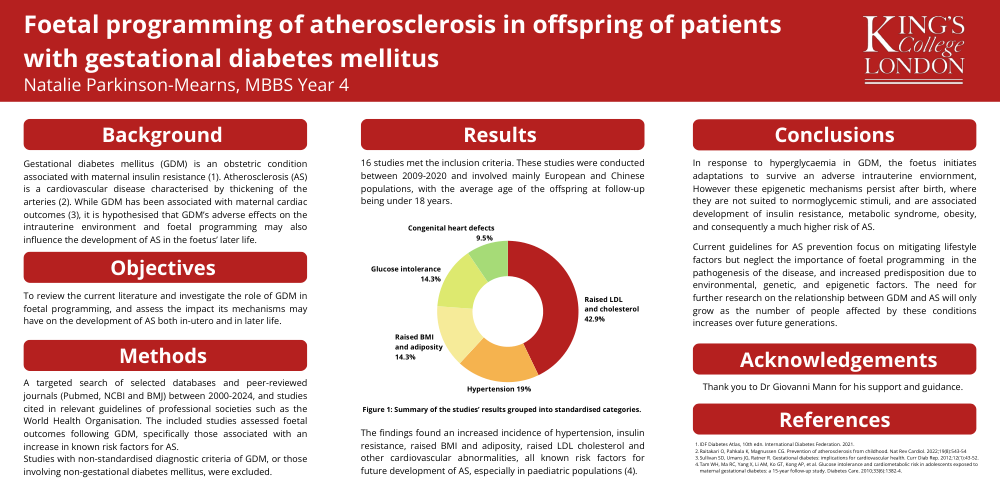
16 studies met the inclusion criteria. These studies were conducted between 2009-2020 and involved mainly European and Chinese populations, with the average age of the offspring at follow-up being under 18 years.
The findings found an increased incidence of hypertension, insulin resistance, raised BMI and adiposity, raised LDL cholesterol and other cardiovascular abnormalities, all known risk factors for future development of AS, especially in paediatric populations (4).
Conclusions
In response to hyperglycaemia in GDM, the foetus initiates adaptations to survive an adverse intrauterine enviornment, However these epigenetic mechanisms persist after birth, where they are not suited to normoglycemic stimuli, and are associated development of insulin resistance, metabolic syndrome, obesity, and consequently a much higher risk of AS.
Current guidelines for AS prevention focus on mitigating lifestyle factors but neglect the importance of foetal programming in the pathogenesis of the disease, and increased predisposition due to environmental, genetic, and epigenetic factors. The need for further research on the relationship between GDM and AS will only grow as the number of people affected by these conditions increases over future generations.