2,281 posters, 63 videos, 56 audios, 43 topics, 18 sessions, 6,174 authors, 2,323 institutions
ePostersLive by SciGen Technologies S.A. All rights reserved.
RCOG World Congress 2025
June 23 - 25, 2025 | ExCeL London, UK
EP.0446
Outcomes of Pregnancies with Isolated Echogenic Bowel: A Three-Year Retrospective Analysis
Poster Presenter
Authors
Affiliations
Part of Topic
Fetal medicine
Outcomes of Pregnancies with Isolated Echogenic Bowel: A Three-Year Retrospective Analysis (2021 to 2023)
Anjali ( Junior Clinical Fellow in Obstetrics and Gynecology)1, Ms Sivaprakasam Manjambigai (Consultant, Fetal Medicine), Samantha Wood (Fetal medicine Midwife)
Introduction :This study aimed to evaluate maternal and neonatal outcomes associated with isolated echogenic bowel over the past three years (2021–2023). It also assessed adherence to antenatal screening and management protocols, identifying gaps in clinical practices.
Design:This retrospective observational study reviewed cases of isolated echogenic bowel identified during routine anomaly scans conducted between 18–20 weeks of gestation. Echogenic bowel is defined as bowel echogenicity as bright as bone and can occur in approximately 0.4% of pregnancies. While most cases are having normal outcome, it can signal underlying conditions such as infections (CMV), cystic fibrosis (CF), chromosomal abnormalities, and placental insufficiency. The study was done to evaluate the adherence to guidelines for referrals, investigations, and follow-up management.
Method - Twenty pregnancies with a diagnosis of isolated echogenic bowel were evaluated and the participants were identified through routine anomaly scans at 18-20 weeks. They were referred to the Fetal Medicine Clinic (FMC) for further evaluation as per protocol and data were collected on maternal history, screening results, pregnancy complications, and neonatal outcomes. Investigations included maternal CMV (cytomegalovirus) antibody testing, CF carrier screening for both parents, serial growth scans were conducted to monitor fetal growth and rule out placental insufficiency. Data analysis focused on gestational age at diagnosis, referral patterns, adherence to protocols, and pregnancy outcomes.
Results -
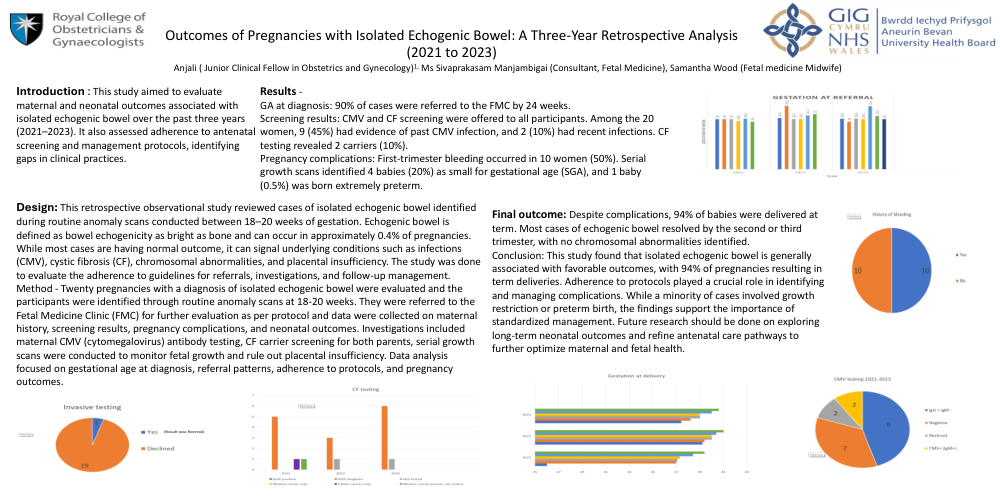
GA at diagnosis: 90% of cases were referred to the FMC by 24 weeks.
Screening results: CMV and CF screening were offered to all participants. Among the 20 women, 9 (45%) had evidence of past CMV infection, and 2 (10%) had recent infections. CF testing revealed 2 carriers (10%).
Pregnancy complications: First-trimester bleeding occurred in 10 women (50%). Serial growth scans identified 4 babies (20%) as small for gestational age (SGA), and 1 baby (0.5%) was born extremely preterm.
Final outcome: Despite complications, 94% of babies were delivered at term. Most cases of echogenic bowel resolved by the second or third trimester, with no chromosomal abnormalities identified.
Conclusion: This study found that isolated echogenic bowel is generally associated with favorable outcomes, with 94% of pregnancies resulting in term deliveries. Adherence to protocols played a crucial role in identifying and managing complications. While a minority of cases involved growth restriction or preterm birth, the findings support the importance of standardized management. Future research should be done on exploring long-term neonatal outcomes and refine antenatal care pathways to further optimize maternal and fetal health.