2,281 posters, 63 videos, 56 audios, 43 topics, 18 sessions, 6,174 authors, 2,323 institutions
ePostersLive by SciGen Technologies S.A. All rights reserved.
RCOG World Congress 2025
June 23 - 25, 2025 | ExCeL London, UK
EP.0416
Multidisciplinary Approach to managing prenatally diagnosed Cardiac Anomalies in a DGH
Poster Presenter
Part of Topic
Fetal medicine
Aim:
Prenatal diagnosis of congenital heart disease (CHD) during routine mid-trimester screening and history-based referral for echocardiogram and their newborn outcomes in DGH.
Method:
A Retrospective data collection was conducted in 2022 in a UK-based DGH of 63 babies with high risk of prenatal CHD.
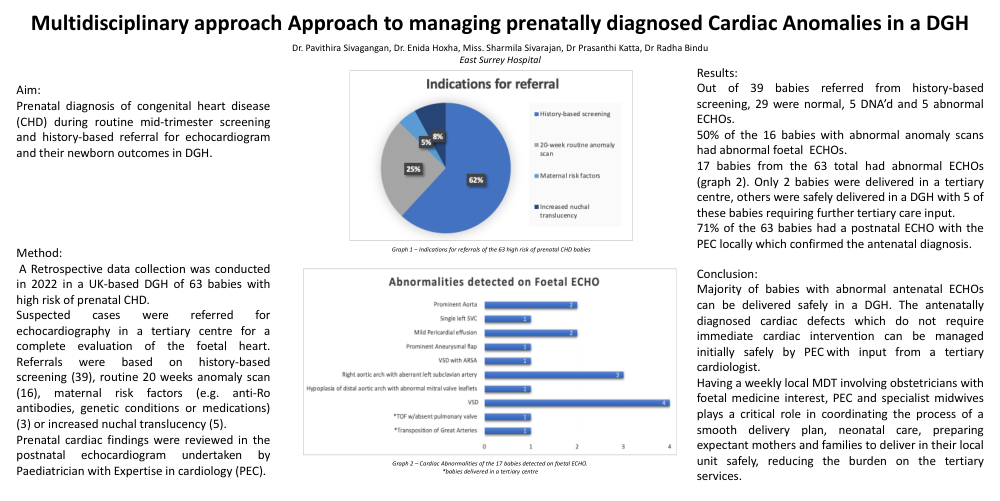
Suspected cases were referred for echocardiography in a tertiary centre for a complete evaluation of the foetal heart. Referrals were based on history-based screening (39), routine 20 weeks anomaly scan (16), maternal risk factors (e.g. anti-Ro antibodies, genetic conditions or medications) (3) or increased nuchal translucency (5).
Prenatal cardiac findings were reviewed in the postnatal echocardiogram undertaken by Paediatrician with Expertise in cardiology (PEC).
Results:
Out of 39 babies referred from history-based screening, 29 were normal, 5 DNA’d and 5 abnormal ECHOs.
50% of the 16 babies with abnormal anomaly scans had abnormal foetal ECHOs.
17 babies from the 63 total had abnormal ECHOs (graph 2). Only 2 babies were delivered in a tertiary centre, others were safely delivered in a DGH with 5 of these babies requiring further tertiary care input.
71% of the 63 babies had a postnatal ECHO with the PEC locally which confirmed the antenatal diagnosis.
Conclusion:
Majority of babies with abnormal antenatal ECHOs can be delivered safely in a DGH. The antenatally diagnosed cardiac defects which do not require immediate cardiac intervention can be managed initially safely by PEC with input from a tertiary cardiologist.
Having a weekly local MDT involving obstetricians with foetal medicine interest, PEC and specialist midwives plays a critical role in coordinating the process of a smooth delivery plan, neonatal care, preparing expectant mothers and families to deliver in their local unit safely, reducing the burden on the tertiary services.