2,281 posters, 63 videos, 56 audios, 43 topics, 18 sessions, 6,174 authors, 2,323 institutions
ePostersLive by SciGen Technologies S.A. All rights reserved.
RCOG World Congress 2025
June 23 - 25, 2025 | ExCeL London, UK
EP.2198
Under Pressure: Our Experience Introducing Anal Manometry to an NHS Perineal Service
Poster Presenter
Part of Topic
Urogynaecology/pelvic floor
Under Pressure: Our Experience Introducing Anal Manometry to an NHS Perineal Service
Georgina Thompson BMBS MRCOG1, Claudine Domoney MBBChir MRCOG1, Charlotte Downing1 ,
James MacTaggart1 , Anna Holmes1 , Debora Alcayde1 ,Foteini Chatziioannou1
1:Chelsea and Westminster Hospital NHS Trust, London, UK
Introduction
Following obstetric anal sphincter injury (OASI), counselling on future mode of delivery (MOD) should incorporate objective assessment of sphincter function and symptoms to mitigate the risk of recurrent trauma or worsening function.
While endoanal ultrasound evaluates anatomical defects, anal manometry provides complementary information on physiological function.
Our perineal service is multidisciplinary, led by specialist midwives and physiotherapists, and supported by consultant obstetricians.
We describe the integration of manometry into routine care and reflect on the challenges of translating quantitative data into clinical decision-making.
Objective
We assessed the role of anal manometry in shaping delivery mode decisions for women with prior obstetric anal sphincter injury (OASI). This evaluation explored how closely clinical advice matched guideline-based thresholds derived from manometry and ultrasound results.
Results
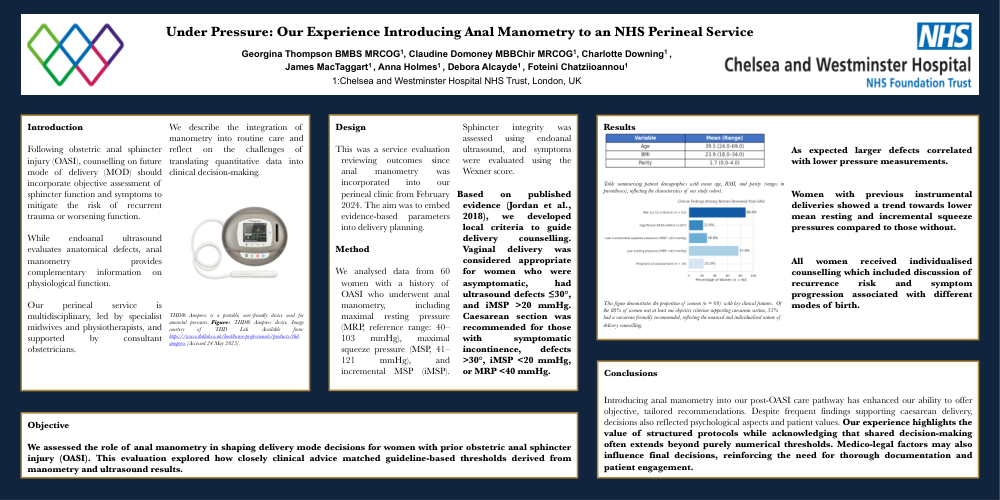
Table summarising patient demographics with mean age, BMI, and parity (ranges in parentheses), reflecting the characteristics of our study cohort.
This figure demonstrates the proportion of women (n = 60) with key clinical features. Of the 88% of women met at least one objective criterion supporting caesarean section, 35% had a caesarean formally recommended, reflecting the nuanced and individualised nature of delivery counselling.
As expected larger defects correlated with lower pressure measurements.
Women with previous instrumental deliveries showed a trend towards lower mean resting and incremental squeeze pressures compared to those without.
All women received individualised counselling which included discussion of recurrence risk and symptom progression associated with different modes of birth.
Conclusions
Introducing anal manometry into our post-OASI care pathway has enhanced our ability to offer objective, tailored recommendations. Despite frequent findings supporting caesarean delivery, decisions also reflected psychological aspects and patient values. Our experience highlights the value of structured protocols while acknowledging that shared decision-making often extends beyond purely numerical thresholds. Medico-legal factors may also influence final decisions, reinforcing the need for thorough documentation and patient engagement.