2,281 posters, 63 videos, 56 audios, 43 topics, 18 sessions, 6,174 authors, 2,323 institutions
ePostersLive by SciGen Technologies S.A. All rights reserved.
RCOG World Congress 2025
June 23 - 25, 2025 | ExCeL London, UK
EP.2166
Improvement in Pelvic Pain After Reconstructive Surgery for pelvic organ prolapse
Poster Presenter
Authors
Affiliations
Part of Topic
Urogynaecology/pelvic floor
ABSTRACT
Background: Pelvic organ prolapse (POP) significantly impacts women's quality of life, with
symptoms including pelvic pain and dyspareunia. This study aims to evaluate the improvement
of pelvic pain, including low backache, pelvic pain, and dyspareunia, following pelvic floor
reconstructive surgery.
Methods: A prospective cohort study was conducted at the Aga Khan Hospital Karachi,
enrolling 35 women with POP. Patients were followed from February 2022 to January 2023,
assessing outcomes through validated questionnaires (POPDI-6, FSFI) preoperatively and at 1, 3,
and 6 months postoperatively. The study focused on the impact of surgery on pelvic pain and
dyspareunia, with an analysis of potential factors influencing pre-operative pain severity.
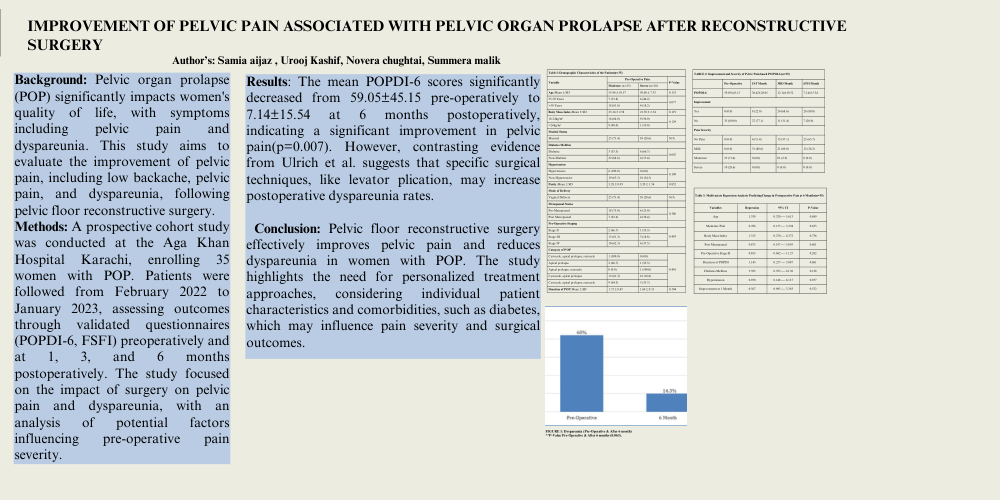
Results: The mean POPDI-6 scores significantly decreased from 59.05±45.15 pre-operatively to
7.14±15.54 at 6 months postoperatively, indicating a significant improvement in pelvic pain
(p<0.001). Dyspareunia prevalence reduced from 60.0% pre-operatively to 14.3% six months
after surgery. Diabetic patients were more likely to experience severe pre-operative pain
(p=0.007). However, contrasting evidence from Ulrich et al. suggests that specific surgical
techniques, like levator plication, may increase postoperative dyspareunia rates.
Conclusion: Pelvic floor reconstructive surgery effectively improves pelvic pain and reduces
dyspareunia in women with POP. The study highlights the need for personalized treatment
approaches, considering individual patient characteristics and comorbidities, such as diabetes,
which may influence pain severity and surgical outcomes.