2,281 posters, 63 videos, 56 audios, 43 topics, 18 sessions, 6,174 authors, 2,323 institutions
ePostersLive by SciGen Technologies S.A. All rights reserved.
RCOG World Congress 2025
June 23 - 25, 2025 | ExCeL London, UK
EP.1949
Improving Efficiency in Labor Induction Processes: A PDSA-Based Quality Improvement Project
Poster Presenter
Authors
Affiliations
Part of Topic
Quality improvement
Improving Efficiency in Labor Induction Processes: A PDSA-Based Quality Improvement Project
Background
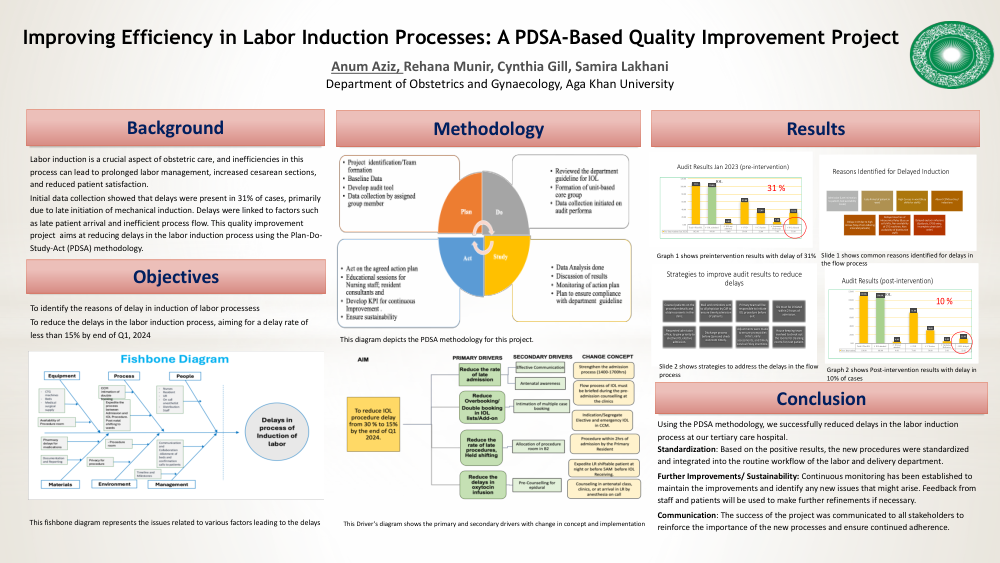
Labor induction is a key obstetric procedure, accounting for 25% of births in high-resource settings. Delays in the induction process can prolong labor management, increase cesarean section rates, and lower patient satisfaction. At our tertiary care hospital, inefficiencies in labor induction scheduling and workflow led to significant delays. This quality improvement project aimed to reduce induction delays and enhance patient experience using the Plan-Do-Study-Act (PDSA) methodology.
Methods
Baseline data from January–March 2023 revealed that 33% of labor inductions were delayed, primarily due to late patient arrivals and inefficient workflow processes. Our goal was to reduce the delay rate to below 15% by the end of 2023. Interventions included:
a. Early counseling in outpateint clinics and admission scheduling before 1700 hours.
b. Timely completion of pre-induction assessments, intracervical foley catheter insertion and medication entry
c. Stakeholder Engagement by involving nurses, residents, consultants and administrative staff in implementation and monitoring
The intervention launched in April 2023. Regular monitoring meetings addressed implementation challenges, ensuring adherence to the new workflow following PDSA cycles.
Results
Post-intervention data (October–December 2023) showed a reduction in delays to 9%, surpassing the target. Improved workflow efficiency and early patient admissions were key contributors to this success. However, occasional delays persisted due to patient preferences for late admissions and on-call teams prioritizing emergency cases.
Conclusion
Implementing structured workflow improvements through the PDSA cycle significantly reduced labor induction delays, enhancing both patient safety and satisfaction. These interventions have been integrated into routine practice, with continuous monitoring to sustain improvements. Future efforts will focus on optimizing team workload distribution and addressing patient preferences to further enhance efficiency. Our approach can serve as a model for similar healthcare settings facing labor induction delays.