2,281 posters, 63 videos, 56 audios, 43 topics, 18 sessions, 6,174 authors, 2,323 institutions
ePostersLive by SciGen Technologies S.A. All rights reserved.
RCOG World Congress 2025
June 23 - 25, 2025 | ExCeL London, UK
EP.1944
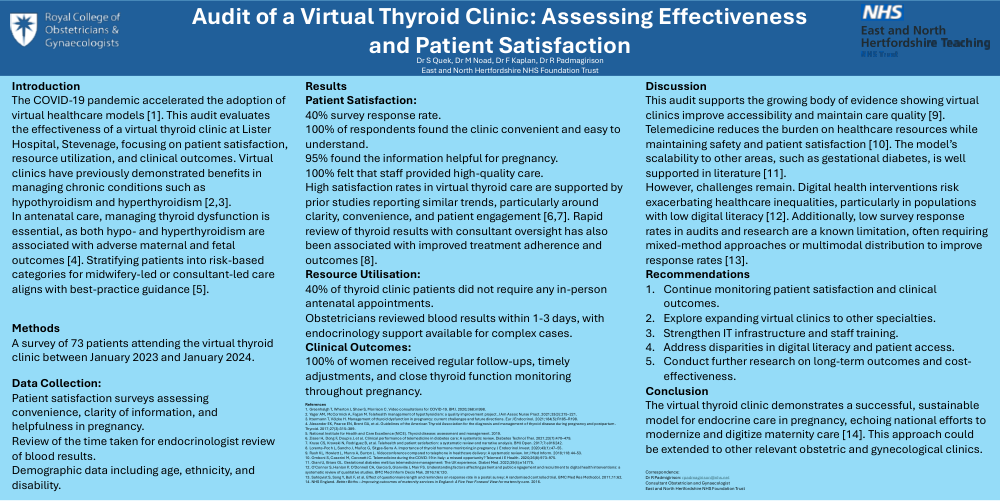
Audit of a Virtual Thyroid Clinic: Assessing Effectiveness and Patient Satisfaction
Poster Presenter
Part of Topic
Quality improvement
Audit of a Virtual Thyroid Clinic: Assessing Effectiveness and Patient Satisfaction
Introduction
The COVID-19 pandemic accelerated the adoption of virtual healthcare models [1]. This audit evaluates the effectiveness of a virtual thyroid clinic at Lister Hospital, Stevenage, focusing on patient satisfaction, resource utilization, and clinical outcomes. Virtual clinics have previously demonstrated benefits in managing chronic conditions such as hypothyroidism and hyperthyroidism [2,3].
In antenatal care, managing thyroid dysfunction is essential, as both hypo- and hyperthyroidism are associated with adverse maternal and fetal outcomes [4]. Stratifying patients into risk-based categories for midwifery-led or consultant-led care aligns with best-practice guidance [5].
Methods
A survey of 73 patients attending the virtual thyroid clinic between January 2023 and January 2024.
Data Collection:
Patient satisfaction surveys assessing convenience, clarity of information, and helpfulness in pregnancy.
Review of the time taken for endocrinologist review of blood results.
Demographic data including age, ethnicity, and disability.
Results
Patient Satisfaction:
40% survey response rate.
100% of respondents found the clinic convenient and easy to understand.
95% found the information helpful for pregnancy.
100% felt that staff provided high-quality care.
High satisfaction rates in virtual thyroid care are supported by prior studies reporting similar trends, particularly around clarity, convenience, and patient engagement [6,7]. Rapid review of thyroid results with consultant oversight has also been associated with improved treatment adherence and outcomes [8].
Resource Utilisation:
40% of thyroid clinic patients did not require any in-person antenatal appointments.
Obstetricians reviewed blood results within 1-3 days, with endocrinology support available for complex cases.
Clinical Outcomes:
100% of women received regular follow-ups, timely adjustments, and close thyroid function monitoring throughout pregnancy.
Discussion
This audit supports the growing body of evidence showing virtual clinics improve accessibility and maintain care quality [9]. Telemedicine reduces the burden on healthcare resources while maintaining safety and patient satisfaction [10]. The model’s scalability to other areas, such as gestational diabetes, is well supported in literature [11].
However, challenges remain. Digital health interventions risk exacerbating healthcare inequalities, particularly in populations with low digital literacy [12]. Additionally, low survey response rates in audits and research are a known limitation, often requiring mixed-method approaches or multimodal distribution to improve response rates [13].
Recommendations
Conclusion
The virtual thyroid clinic demonstrates a successful, sustainable model for endocrine care in pregnancy, echoing national efforts to modernize and digitize maternity care [14]. Thisapproach could be extended to other relevant obstetric and gynecological clinics.