2,281 posters, 63 videos, 56 audios, 43 topics, 18 sessions, 6,174 authors, 2,323 institutions
ePostersLive by SciGen Technologies S.A. All rights reserved.
RCOG World Congress 2025
June 23 - 25, 2025 | ExCeL London, UK
EP.1935
Dilapan-S for induction of labour in The Coombe Women's Hospital
Poster Presenter
Part of Topic
Quality improvement
Objective
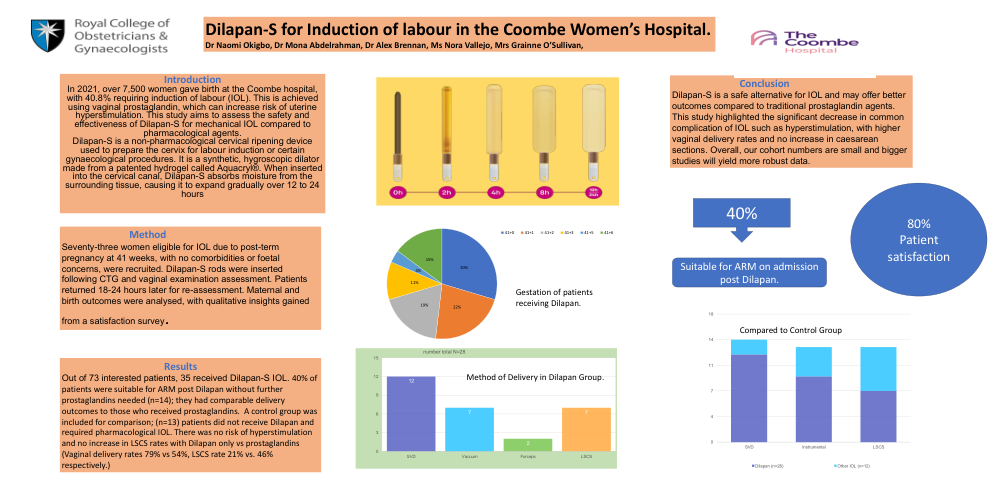
In 2021, over 7,500 women gave birth at the Coombe hospital, with 40.8% requiring induction of labour (IOL). This is achieved using vaginal prostaglandin, which can increase risk of uterine hyperstimulation. This study aims to assess the safety and effectiveness of Dilapan-S for mechanical IOL compared to pharmacological agents.
Method
Seventy-three women eligible for IOL due to post-term pregnancy at 41 weeks, with no comorbidities or fetal concerns, were recruited. Dilapan-S rods were inserted following CTG and vaginal examination assessment. Patients returned 18-24 hours later for re-assessment. Maternal and birth outcomes were analysed, with qualitative insights gained from a satisfaction survey.
Results
Out of 73 interested patients, 35 received Dilapan-S IOL. 40% of patients were suitable for ARM post Dilapan without further prostaglandins needed (n=14); they had comparative outcomes to those who received prostaglandins instead (n=13- patient did not receive Dilapan and required pharmacological IOL). There was no risk of hyperstimulation and no increase in LSCS rates with Dilapan only vs prostaglandins (Vaginal delivery rates 79% vs 54%, LSCS rate 21% vs. 46% respectively).
The satisfaction survey was done post Dilapan IOL (n=15) with 80% of patients stating they would choose to have mechanical outpatient IOL again in future pregnancies.
Conclusion
Dilapan-S is a safe alternative for IOL, and may offer better outcomes compared to traditional prostaglandin agents, with higher vaginal delivery rates and no increase in cesarean sections. Overall, our cohort numbers are small and bigger studies will yield more robust data.