2,281 posters, 63 videos, 56 audios, 43 topics, 18 sessions, 6,174 authors, 2,323 institutions
ePostersLive by SciGen Technologies S.A. All rights reserved.
RCOG World Congress 2025
June 23 - 25, 2025 | ExCeL London, UK
EP.1894
Audit on Induction of labor at DGRI
Poster Presenter
Authors
Affiliations
Part of Topic
Quality improvement
Audit on Induction of Labourat DGRI
Dr. Humaira Saeed Malik, Dumfries & Galloway Royal Infirmary
Introduction
Induction of labour, whereby the onset of labour is stimulated using pharmacological or mechanical methodsMost common obstetric procedures in the UK.
The rate of Induction of labor has increased in recent years.
Outcomes in terms of mode of birth specifically, instrumental and cesareanbirth have been variably reported
Objective
The audit aimed to evaluate the Induction of labor practices at Dumfries and Galloway Royal Infirmary between 1st January and 30 April 2023, focusing on indications, methods, outcomes, and compliance with NICE guideline
Design
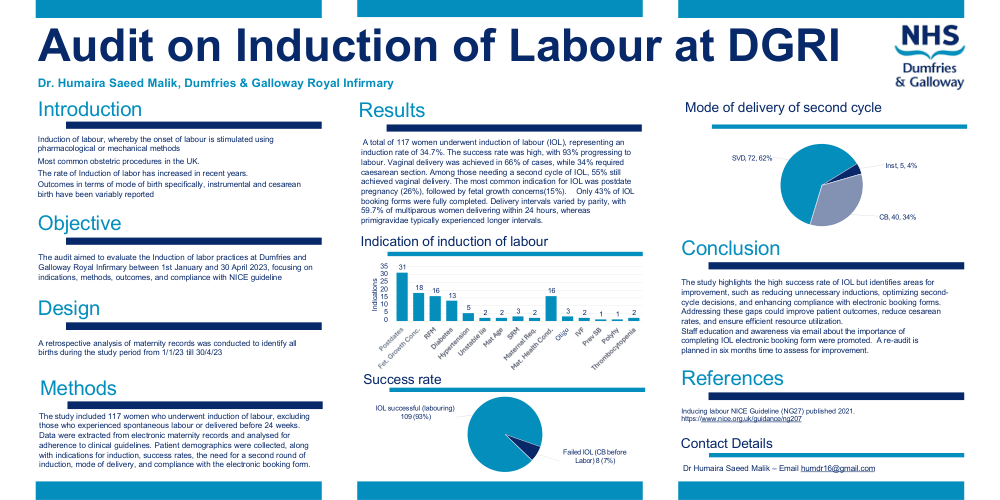
The study included 117 women who underwent induction of labour, excluding those who experienced spontaneous labour or delivered before 24 weeks. Data were extracted from electronic maternity records and analysed for adherence to clinical guidelines. Patient demographics were collected, along with indications for induction, success rates, the need for a second round of induction, mode of delivery, and compliance with the electronic booking form.
Results
A total of 117 women underwent induction of labour (IOL), representing aninduction rate of 34.7%. The success rate was high, with 93% progressing to
labour. Vaginal delivery was achieved in 66% of cases, while 34% required caesarean section. Among those needing a second cycle of IOL, 55% still
achieved vaginal delivery. The most common indication for IOL was postdate pregnancy (26%), followed by fetal growth concerns(15%). Only 43% of IOL
booking forms were fully completed. Delivery intervals varied by parity, with 59.7% of multiparous women delivering within 24 hours, whereas primigravidae typically experienced longer intervals.
Conclusion
The study highlights the high success rate of IOL but identifies areas for improvement, such as reducing unnecessary inductions, optimizing second-cycle decisions, and enhancing compliance with electronic booking forms.Addressing these gaps could improve patient outcomes, reduce cesarean rates, and ensure efficient resource utilization. Staff education and awareness via email about the importance of completing IOL electronic booking form were promoted. A re-audit is planned in six months time to assess for improvement.