2,281 posters, 63 videos, 56 audios, 43 topics, 18 sessions, 6,174 authors, 2,323 institutions
ePostersLive by SciGen Technologies S.A. All rights reserved.
RCOG World Congress 2025
June 23 - 25, 2025 | ExCeL London, UK
EP.1884
Enhancing Postnatal Care: A single-center quality improvement initiative
Poster Presenter
Authors
Affiliations
Part of Topic
Quality improvement
Audio
Enhancing Postnatal Care: A Single-Center Quality Improvement Initiative
Laxmi Venkatachalam, Stanley Ugochukwu, Doaa Zeidan
Objective
The aim of this quality improvement project was to enhance the standard of postnatal care at our trust by addressing issues in
As a secondary objective, we identified the need for a structured pathway to ensure all postnatal re-admissions receive a consultant review within 6 hours.
Design
Individualized postnatal care must aim to promote and maintain optimal health and well-being in the woman and her baby. The project involved-
Method
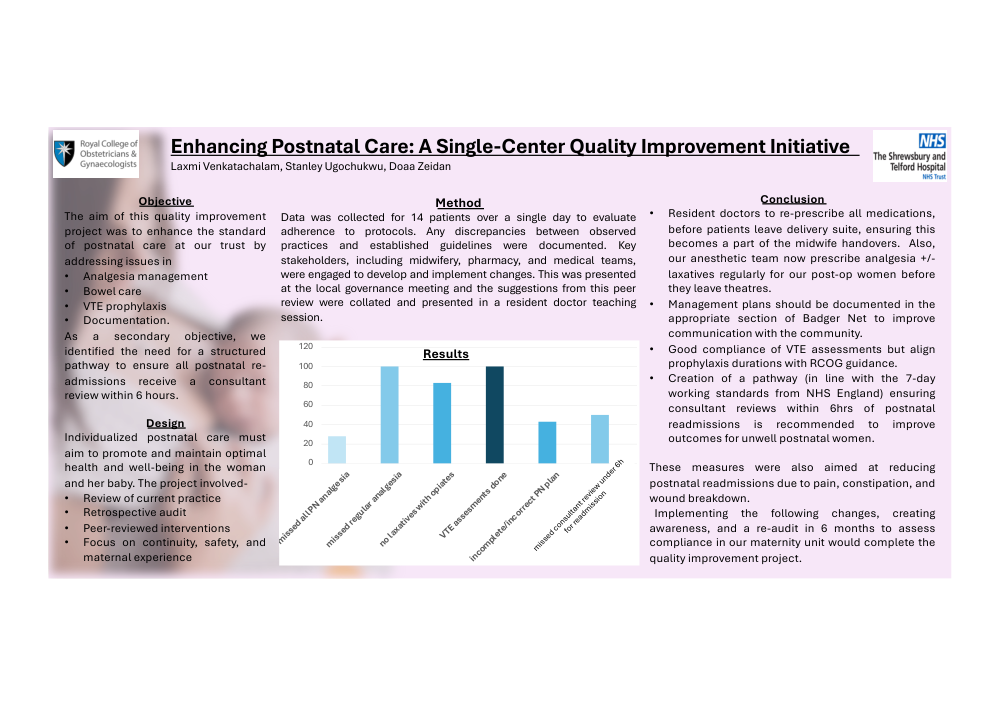
Data was collected for 14 patients over a single day to evaluate adherence to protocols. Any discrepancies between observed practices and established guidelines were documented. Key stakeholders, including midwifery, pharmacy, and medical teams, were engaged to develop and implement changes. This was presented at the local governance meeting and the suggestions from this peer review were collated and presented in a resident doctor teaching session.
Results-in graph
28% of patients missed postnatal analgesia
83% did not receive laxatives despite being prescribed dihydrocodeine
Regularly prescribed analgesia was missed in 100% of women
VTE assessments, we were 100% compliant in completing them, but we were routinely overprescribing tinzaparin and not aligning with RCOG guidance—particularly for those with a VTE score of 3.
For documentation, we use BadgerNet, and we highlighted that postnatal plans were documented in incorrect sections in 43% of cases.
We also found we were not meeting the standard of a consultant review within 6 hours for postnatal readmissions—a target set by NHS England for units with 24-hour consultant cover on the floor.Under 50% of postnatal readmissions received a consultant review within 6 hours
Conclusion
These measures were also aimed at reducing postnatal readmissions due to pain, constipation, and wound breakdown.
Implementing the following changes, creating awareness, and a re-audit in 6 months to assess compliance in our maternity unit would complete the quality improvement project.