2,281 posters, 63 videos, 56 audios, 43 topics, 18 sessions, 6,174 authors, 2,323 institutions
ePostersLive by SciGen Technologies S.A. All rights reserved.
RCOG World Congress 2025
June 23 - 25, 2025 | ExCeL London, UK
EP.1841
Management and Outcomes of Preterm Prelabour Rupture of Membranes: A Retrospective Review
Poster Presenter
Authors
Affiliations
Dorset County Hospital NHSFT, TCS, Dorset County Hospital NHS FT
Part of Topic
Quality improvement
Management and Outcomes of Preterm Prelabour Rupture of Membranes: A Retrospective Review
Dr Charu Jain, Dr Fatema Zohora, Dr Suguna Balasundaram, Mr Kirti Kumar
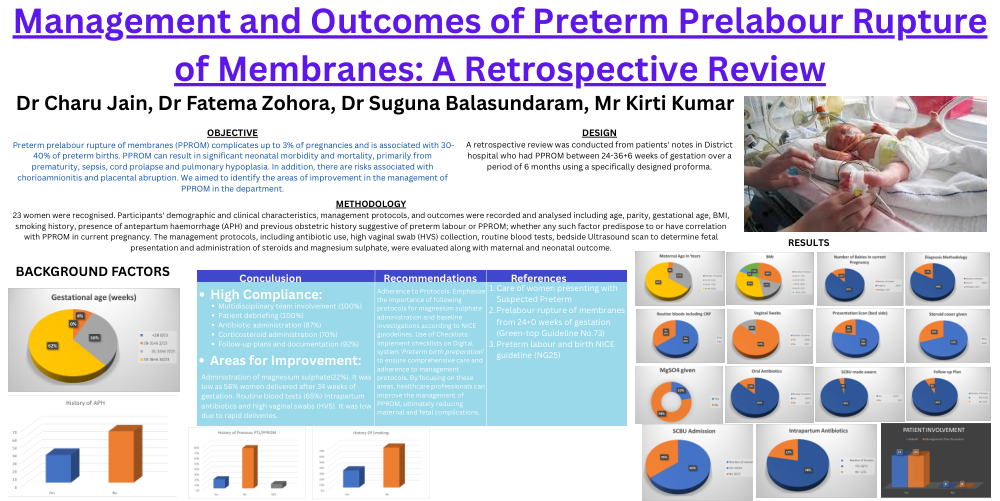
OBJECTIVE
Preterm prelabour rupture of membranes (PPROM) complicates up to 3% of pregnancies and is associated with 30- 40% of preterm births. PPROM can result in significant neonatal morbidity and mortality, primarily from prematurity, sepsis, cord prolapse and pulmonary hypoplasia. In addition, there are risks associated with chorioamnionitis and placental abruption. We aimed to identify the areas of improvement in the management of PPROM in the department.
DESIGN
A retrospective review was conducted from patients' notes in District hospital who had PPROM between 24-36+6 weeks of gestation over a period of 6 months using a specifically designed proforma.
METHODOLOGY
23 women were recognised. Participants' demographic and clinical characteristics, management protocols, and outcomes were recorded and analysed including age, parity, gestational age, BMI, smoking history, presence of antepartum haemorrhage (APH) and previous obstetric history suggestive of preterm labour or PPROM; whether any such factor predispose to or have correlation with PPROM in current pregnancy. The management protocols, including antibiotic use, high vaginal swab (HVS) collection, routine blood tests, bedside Ultrasound scan to determine fetal presentation and administration of steroids and magnesium sulphate, were evaluated along with maternal and neonatal outcome.
Conclusion:
- High Compliance:
- Multidisciplinary team involvement (100%)
- Patient debriefing (100%)
- Antibiotic administration (87%)
- Corticosteroid administration (70%)
- Follow-up plans and documentation (92%)
- Areas for Improvement:
Administration of magnesium sulphate(22%). It was low as 56% women delivered after 34 weeks of gestation. Routine blood tests (65%) Intrapartum antibiotics and high vaginal swabs (HVS). It was low due to rapid deliveries.
Recommendations:
Adherence to Protocols: Emphasize the importance of following protocols for magnesium sulphate administration and baseline investigations according to NICE guiodelines. Use of Checklists: Implement checklists on Digital system ‘Preterm birth preparation’ to ensure comprehensive care and adherence to management protocols. By focusing on these areas, healthcare professionals can improve the management of PPROM, ultimately reducing maternal and fetal complications.
Refrences:
- Care of women presenting with Suspected Preterm
- Prelabour rupture of membranes from 24+0 weeks of gestation (Green-top Guideline No.73)
- Preterm labour and birth NICE guideline (NG25)