2,281 posters, 63 videos, 56 audios, 43 topics, 18 sessions, 6,174 authors, 2,323 institutions
ePostersLive by SciGen Technologies S.A. All rights reserved.
RCOG World Congress 2025
June 23 - 25, 2025 | ExCeL London, UK
EP.1799
Evaluation of vulnerable women with child custody loss
Poster Presenter
Authors
Affiliations
Part of Topic
PNMH
Title:
Evaluation of vulnerable women with child custody loss
Objectives:
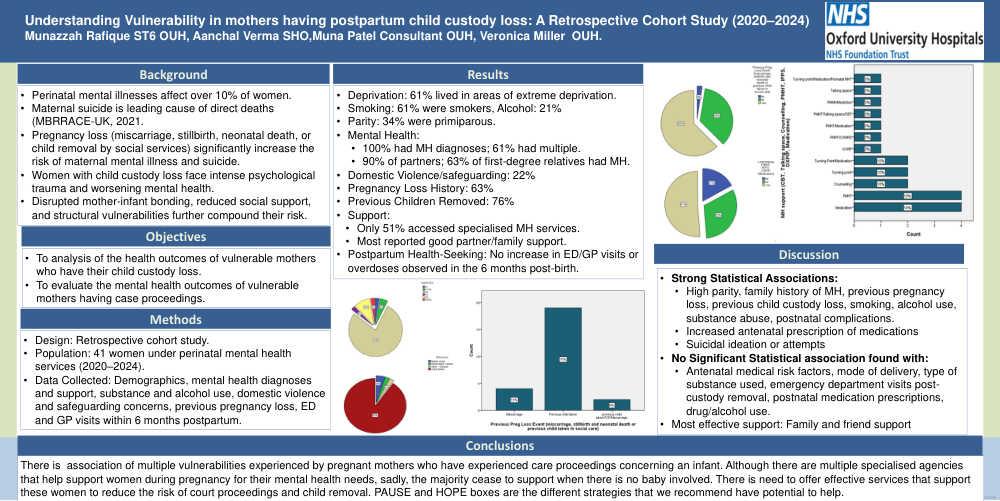
To evaluate vulnerable women whose children are taken away by social care. We explored the background and characteristics of mothers whose infants were subject to care proceedings, with the aim to inspect options of preventative interventions that can be provided to targeted high risk mothers especially in the postpartum period.
Design:
Retrospective cohort study.
Method:
We reviewed electronic health record of 41 patients under perinatal mental health teams whose babies were taken into custody in the years 2020-2024. The data collected include demographic characteristics, pregnancy and labour care, Mental Health diagnoses, Substance and alcohol use, family history of MH, type of MH support, previous pregnancy loss event and domestic violence or other safeguarding concerns. We also explored if there were any admissions to the emergency department or to the GP in the 6 months following birth.
Results:
More than half of the women in the cohort (61%) resided in areas of extreme deprivation. 34% were primiparous and two thirds (61%) smoked. Almost all the women in our study had mental health problems, of which 61% reported multiple diagnoses. There was positive hx of significant mental health issues in 90% of partners and 63% in other 1st degree family members. 22% were exposed to domestic violence and /or had safeguarding concerns. Alcohol use was seen in 21%, while use of recreational drugs was observed in % of women.
Inspite of this we observed that only 51% of the cohort accessed mental health support from specialised agencies like OXPIP, PMHT, Talking therapies, IPPS to name a few and majority reported good support from family and partner
Previous pregnancy loss events like miscarriage, stillbirth and neonatal death were observed in 63% of women. The alarming fact that we witnessed is that 76% of women had history of previous child being taken away. We did not observe any increase in visit to the emergency department with worsening mental health or overdose incidents in the 6 months following birth.
Conclusion:
This study highlights the association of multiple vulnerabilities experienced by pregnant mothers who have experienced care proceedings concerning an infant. Although there are multiple specialised agencies that help support women during pregnancy for their mental health needs and to tackle substance use, sadly majority cease to support when there is no baby involved. There is abundant evidence that suggests that we require a clearer picture of women’s needs so that we can offer effective services which support these women and help reduce the risk of court proceedings and infant removal. PAUSE and HOPE boxes are the different strategies that we recommend have potential to help reduce this.