2,281 posters, 63 videos, 56 audios, 43 topics, 18 sessions, 6,174 authors, 2,323 institutions
ePostersLive by SciGen Technologies S.A. All rights reserved.
RCOG World Congress 2025
June 23 - 25, 2025 | ExCeL London, UK
EP.1794
Mode of delivery – Does it impact psychological well-being of postpartum women?
Poster Presenter
Authors
Affiliations
Part of Topic
PNMH
Background:
Postpartum period represents a significant transition point in women's lives marked by numerous interlinked biological, psychological, and social changes. Postpartum depression (PPD) is a significant mental health concern that affects many women after childbirth, potentially influenced by various factor, including delivery methods.
Design:
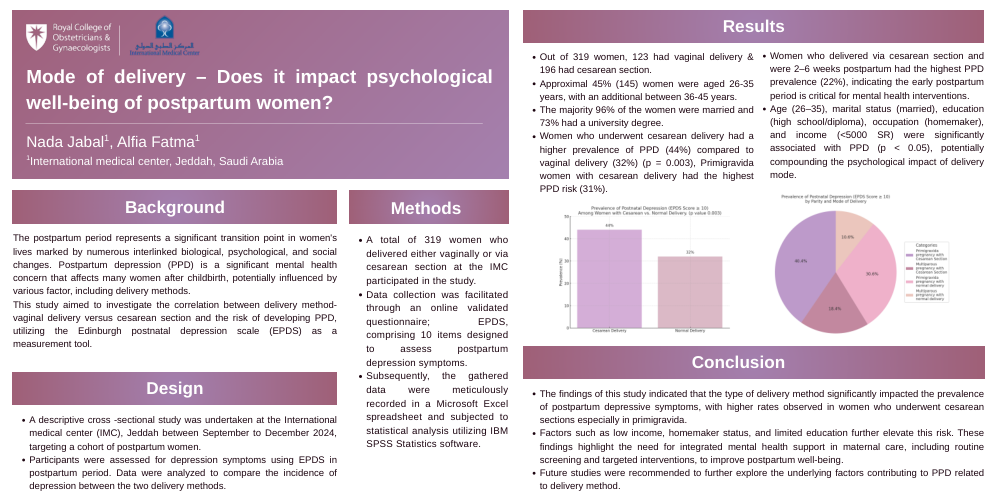
This study aimed to investigate the correlation between delivery methodvaginal delivery versus cesarean section and the risk of developing PPD, utilizing the Edinburgh postnatal depression scale (EPDS) as a measurement tool. A descriptive cross -sectional study was undertaken at the International medical center (IMC), Jeddah between September to December 2024, targeting a cohort of postpartum women. Participants were assessed for depression symptoms using EPDS in postpartum period. Data were analyzed to compare the incidence of depression between the two delivery methods.
Methods:
Total of 319 women who delivered either vaginally or via cesarean section at the IMC participated in the study. Data collection was facilitated through an online validated questionnaire; EPDS, comprising 10 items designed to assess postpartum depression symptoms.
Results:
Out of 319 women, 123 had vaginal delivery & 196 had cesarean section. Approximal 45% (145) women were aged 26-35 years, with an additional between 36-45 years. The majority 96% of the women were married and 73% had a university degree. Women who underwent cesarean delivery had a higher prevalence of PPD (44%) compared to vaginal delivery (32%) (p = 0.003), Primigravida women with cesarean delivery had the highest PPD risk (31%). Results Women who delivered via cesarean section and were 2–6 weeks postpartum had the highest PPD prevalence (22%), indicating the early postpartum period is critical for mental health interventions. Age (26–35), marital status (married), education (high school/diploma), occupation (homemaker), and income (<5000 SR) were significantly associated with PPD (p < 0.05), potentially compounding the psychological impact of delivery mode.
Conclusion:
The findings of this study indicated that the type of delivery method significantly impacted the prevalence of postpartum depressive symptoms, with higher rates observed in women who underwent cesarean sections especially in primigravida. Factors such as low income, homemaker status, and limited education further elevate this risk. These findings highlight the need for integrated mental health support in maternal care, including routine screening and targeted interventions, to improve postpartum well-being. Future studies were recommended to further explore the underlying factors contributing to PPD related to delivery method.