2,281 posters, 63 videos, 56 audios, 43 topics, 18 sessions, 6,174 authors, 2,323 institutions
ePostersLive by SciGen Technologies S.A. All rights reserved.
RCOG World Congress 2025
June 23 - 25, 2025 | ExCeL London, UK
EP.1766
Global Trends in Maternal Obesity: Implications for Obstetric Practice
Poster Presenter
Part of Topic
Obesity & public health
POSTER ID EP.1766
Title
Global Trends in Maternal Obesity: Implications for Obstetric Practice
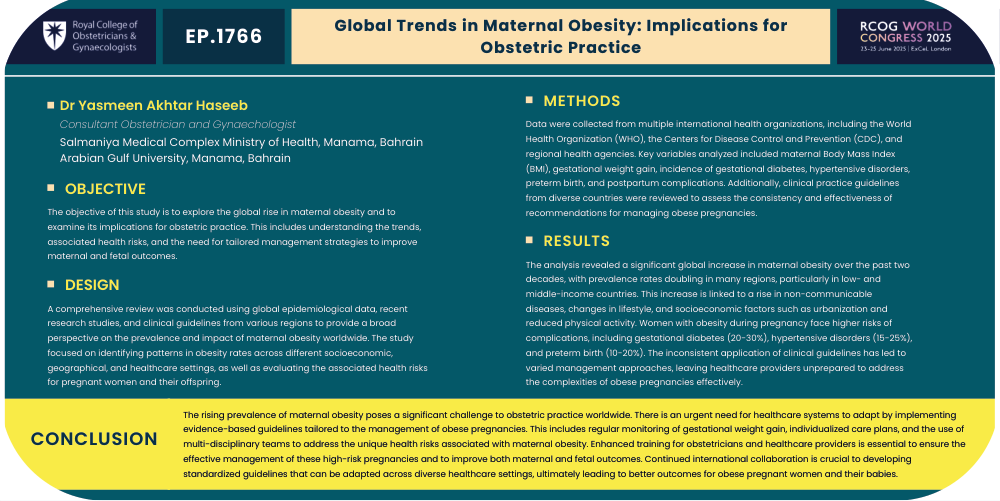
Objective: The objective of this study is to explore the global rise in maternal obesity and to examine its implications for obstetric practice. This includes understanding the trends, associated health risks, and the need for tailored management strategies to improve maternal and fetal outcomes.
Design: A comprehensive review was conducted using global epidemiological data, recent research studies, and clinical guidelines from various regions to provide a broad perspective on the prevalence and impact of maternal obesity worldwide. The study focused on identifying patterns in obesity rates across different socioeconomic, geographical, and healthcare settings, as well as evaluating the associated health risks for pregnant women and their offspring.
Methods: Data were collected from multiple international health organizations, including the World Health Organization (WHO), the Centers for Disease Control and Prevention (CDC), and regional health agencies. Key variables analyzed included maternal Body Mass Index (BMI), gestational weight gain, incidence of gestational diabetes, hypertensive disorders, preterm birth, and postpartum complications. Additionally, clinical practice guidelines from diverse countries were reviewed to assess the consistency and effectiveness of recommendations for managing obese pregnancies.
Results: The analysis revealed a significant global increase in maternal obesity over the past two decades, with prevalence rates doubling in many regions, particularly in low- and middle-income countries. This increase is linked to a rise in non-communicable diseases, changes in lifestyle, and socioeconomic factors such as urbanization and reduced physical activity. Women with obesity during pregnancy face higher risks of complications, including gestational diabetes (20-30%), hypertensive disorders (15-25%), and preterm birth (10-20%). The inconsistent application of clinical guidelines has led to varied management approaches, leaving healthcare providers unprepared to address the complexities of obese pregnancies effectively.
Conclusion: The rising prevalence of maternal obesity poses a significant challenge to obstetric practice worldwide. There is an urgent need for healthcare systems to adapt by implementing evidence-based guidelines tailored to the management of obese pregnancies. This includes regular monitoring of gestational weight gain, individualized care plans, and the use of multi-disciplinary teams to address the unique health risks associated with maternal obesity. Enhanced training for obstetricians and healthcare providers is essential to ensure the effective management of these high-risk pregnancies and to improve both maternal and fetal outcomes. Continued international collaboration is crucial to developing standardized guidelines that can be adapted across diverse healthcare settings, ultimately leading to better outcomes for obese pregnant women and their babies.
Categories
Obesity & public health
Authors and affiliations
Dr Yasmeen Akhtar Haseeb (Presenting) dryasmeenhaseeb@yahoo.com
Salmaniya Medical complex Ministry of Health, Manama, Bahrain
Arabian Gulf University, Manama, Bahrain