2,281 posters, 63 videos, 56 audios, 43 topics, 18 sessions, 6,174 authors, 2,323 institutions
ePostersLive by SciGen Technologies S.A. All rights reserved.
RCOG World Congress 2025
June 23 - 25, 2025 | ExCeL London, UK
EP.1484
Rare Broad Ligament Tear in a Low-Risk Multiparous Pregnancy during Antenatal Period
Poster Presenter
Authors
Affiliations
Part of Topic
Labour ward management
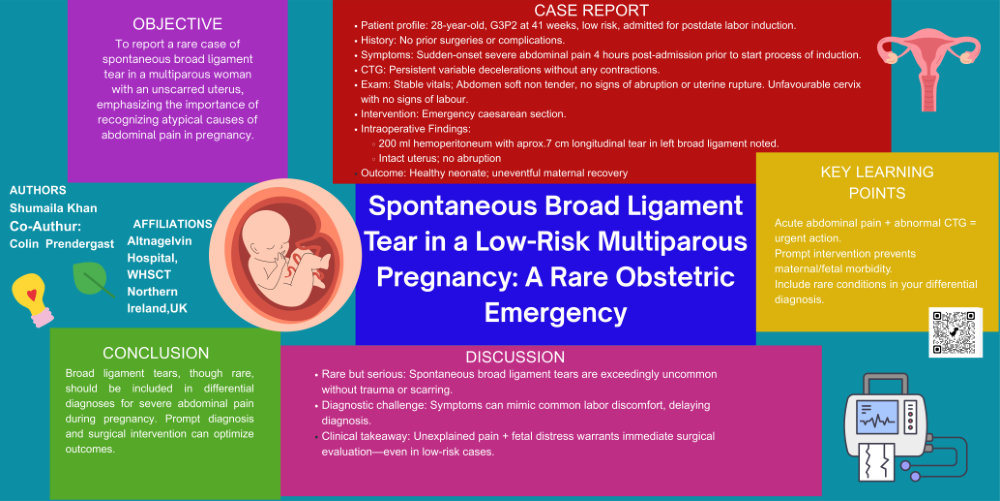
Title: Spontaneous Broad Ligament Tear in a Low-Risk Multiparous Pregnancy: A Rare Obstetric Emergency
Objective
To report a rare case of spontaneous broad ligament tear in a multiparous woman with an unscarred uterus, emphasizing the importance of recognizing atypical causes of abdominal pain in pregnancy.
Case Report
- Patient: 28-year-old, G3P2 at 41 weeks, low risk, admitted for postdate labor induction.
- History: No prior surgeries or complications.
- Symptoms: Sudden-onset severe abdominal pain 4 hours post-admission prior to start process of induction.
- CTG: Persistent variable decelerations without any contractions.
- Exam: Stable vitals; Abdomen soft non tender, no signs of abruption or uterine rupture. Unfavourable cervix with no signs of labour.
- Intervention: Emergency caesarean section.
- Intraoperative Findings:
- 200 ml hemoperitoneum with aprox.7 cm longitudinal tear in left broad ligament noted.
- Intact uterus; no abruption
- Outcome: Healthy neonate; uneventful maternal recovery
Discussion
- Rare but serious: Spontaneous broad ligament tears are exceedingly uncommon without trauma or scarring.
- Diagnostic challenge: Symptoms can mimic common labor discomfort, delaying diagnosis.
- Clinical takeaway: Unexplained pain + fetal distress warrants immediate surgical evaluation—even in low-risk cases.
Key Learning Points
- Acute abdominal pain + abnormal CTG = urgent action.
- Prompt intervention prevents maternal/fetal morbidity.
- Include rare conditions in your differential diagnosis
Conclusion
Broad ligament tears, though rare, should be included in differential diagnoses for severe abdominal pain during pregnancy. Prompt diagnosis and surgical intervention can optimize outcomes.