1,830 posters, 67 videos, 75 audios, 29 topics, 22 sessions, 4,727 authors, 1,697 institutions
ePostersLive by SciGen Technologies S.A. All rights reserved.
RCOG World Congress 2023
June 12 - 14, 2023 | London, UK

PP.0114
The Impact of Gynaecological Cancer on Sexuality in Women
Poster Presenter
Authors
Affiliations
Barking and Redbridge NHS Trust, Guy's and St Thomas' NHS Trust
Part of Topic
Women’s Health and Policies
The Impact of Gynaecological Cancer on Sexuality in Women
E. Hardwick1, N. Lee2, L. Frodsham2
Any cancer diagnosis affects sexuality, but gynaecological cancers disproportionally affect women both physically and psychosexually. Women need a physical, endocrinological and psychosexual approach to their recovery. Nationally, there are nearly five hundred members of the Institute of Psychosexual Medicine who are trained to provide physical and psychosexual support. Availability and access to psychosexual services widely varies across the country, which can affect patients receiving therapy and care. Cancer care providers and support groups on social media have highlighted the deficiencies in understanding of sexual problems and lack of provision of services.
This literature review aims to determine the psychosexual impact of gynaecological cancer with a view to improving pathways to psychosexual services for these women.
A systematic review of the literature was conducted according to the Preferred Reporting Items for Systematic Reviews and Meta-Analyses (PRISMA) statement. PubMed and MEDLINE were searched from 01/01/1980 until 08/02/2021.
Inclusion criteria:
Risk of bias of each study was assessed using CASP and AXIS tools.
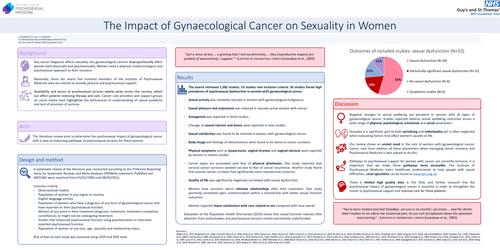
The search retrieved 1,382 studies. 53 studies met inclusion criteria. 39 studies found high prevalence of psychosexual dysfunction in women with gynaecological cancer.
Evaluation of the Population Health Directorate (2019) shows that sexual function receives little attention from policymakers and psychosexual services remain persistently underfunded.
Negative changes to sexual wellbeing are prevalent in women with all types of gynaecological cancer. Studies reported adverse sexual wellbeing outcomes across a wide range of physical, psychological, emotional and social parameters. Sexuality is a significant part of both socialising and individuality yet is often neglected when evaluating factors that affect women’s quality of life. Our review shows an unmet need in the care of women with gynaecological cancer. Cancer care must address all these parameters when managing cancer recovery, and Psychosexual Medicine is best placed to do this. Pathways to psychosexual support for women with cancer are currently tortuous, it is important that we make these pathways more accessible. The Institute of Psychosexual Medicine trains healthcare professionals to help people with sexual difficulties. Local specialists can be found at www.ipm.org.uk. There is limited high quality data in this field, and further research into the psychosexual impact of gynaecological cancer is essential in order to strengthen the routes to psychosexual support and improve care for these patients.