296 posters, 7 videos, 13 audios, 14 topics, 10 sessions, 1,019 authors, 259 institutions
ePostersLive by SciGen Technologies S.A. All rights reserved.
RCOphth Annual Congress 2026
18 - 21 May, 2026 | Manchester Central, Manchester

P300
Performance and Safety of a Virtual Vitreoretinal Surgical Triage Pathway: A Retrospective Audit of 154 Patients
Poster Presenter
Part of Topic
Vitrea retinal diseases and surgery
Performance and Safety of a Virtual Vitreoretinal Surgical Triage Pathway: A Retrospective Audit of 154 Patients
Authors: Alexander Fraser1, Riddhi Thaker1, Aman Chandra1, Beatrice Gallo1
Affiliation: ¹ Southend University Hospital, Mid and South Essex NHS Foundation Trust, United Kingdom
Introduction:
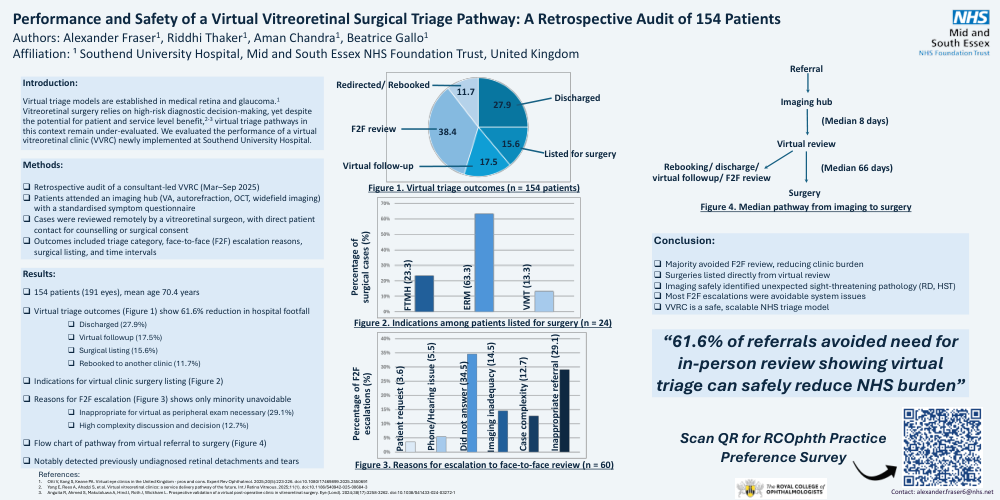
Virtual triage models are established in medical retina and glaucoma.1 Vitreoretinal surgery relies on high-risk diagnostic decision-making, yet despite the potential for patient and service level benefit,2-3 virtual triage pathways in this context remain under-evaluated. We evaluated the performance of a virtual vitreoretinal clinic (VVRC) newly implemented at Southend University Hospital.
Methods:
Results:
Conclusion:
“61.6% of referrals avoided need for in-person review showing virtual triage can safely reduce NHS burden”
References:
1. Otti V, Kang S, Keane PA. Virtual eye clinics in the United Kingdom - pros and cons. Expert Rev Ophthalmol. 2025;20(5):223-226. doi:10.1080/17469899.2025.2550691
2. Yang E, Rees A, Ahadzi S, et al. Virtual vitreoretinal clinics: a service delivery pathway of the future. Int J Retina Vitreous. 2025;11(1). doi:10.1186/S40942-025-00684-3
3. Anguita R, Ahmed S, Makuloluwa A, Hind J, Roth J, Wickham L. Prospective validation of a virtual post-operative clinic in vitreoretinal surgery. Eye (Lond). 2024;38(17):3258-3262. doi:10.1038/S41433-024-03272-1
Link to Practice Preference Survey: https://forms.gle/AZw6HUXbjxpcw7gG7