296 posters, 7 videos, 13 audios, 14 topics, 10 sessions, 1,019 authors, 259 institutions
ePostersLive by SciGen Technologies S.A. All rights reserved.
RCOphth Annual Congress 2026
18 - 21 May, 2026 | Manchester Central, Manchester

P289
A retrospective analysis of Commotio Retinae presentations to a Tertiary CentreEmergency Eye Department (BMEC): presentation, outcomes, management and follow up.
Poster Presenter
Authors
Part of Topic
Vitrea retinal diseases and surgery
Title:
A retrospective analysis of Commotio Retinae presentations to a Tertiary Centre Emergency Eye Department (BMEC): presentation, outcomes, management and follow up.
Background:
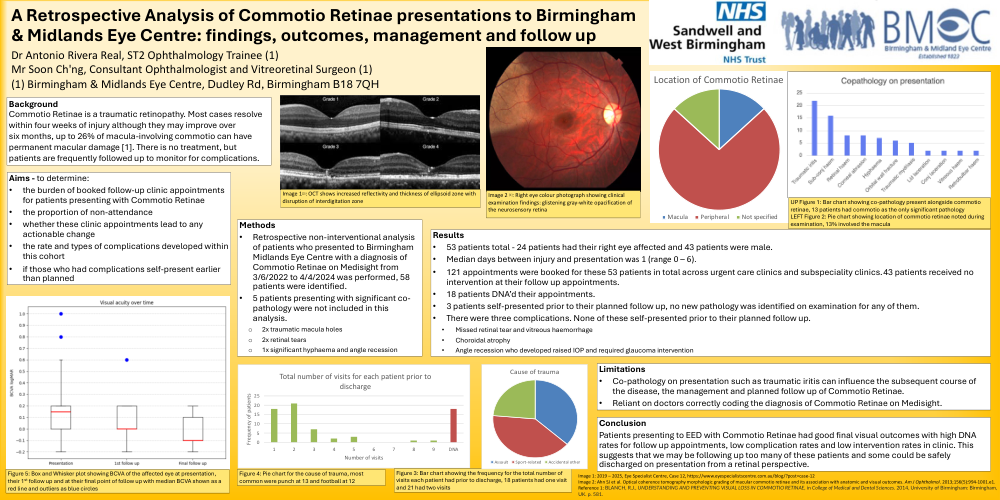
Commotio retinae is a traumatic retinopathy. Most cases resolve within 4 weeks of injury, some can improve for up to 6 months but others can have permanent macular damage. There is no treatment but patients are frequently followed to monitor for complications with no actionable change in clinic.
Aims:
To determine: the burden of booked follow-up clinic appointments for patients presenting with commotio retinae; the proportion of non-attendance; whether these clinic appointments lead to any actionable change; the rate and types of complications developed within this cohort; and if those who complications self-present earlier than planned.
Methods:
Retrospective non-interventional analysis of 53 patients who presented to Birmingham Midlands Eye Centre with a diagnosis of commotio retinae on Medisight from 3/6/2022 to 4/4/2025 was performed. Patients presenting with significant co-pathology were not included in this analysis.
Results:
121 appointments were booked for these 53 patients in total across urgent care clinics and subspeciality clinics. 43 patients received no intervention in their follow up appointments. 17 patients DNA’d their appointments. There were 3 complications. Median BCVA at the point of discharge was –0.1 logMAR (range -0.2 – 0.2).
Conclusion:
Patients presenting to EED with Commotio Retinae had good final visual outcomes with high DNA rates for follow up appointments, low complication rates, low intervention rates in clinic. This suggests that we may be following up too many of these patients and some could be safely discharged on presentation.