358 posters, 97 topics, 122 sessions, 958 authors, 239 institutions
ePostersLive by SciGen Technologies S.A. All rights reserved.
79th PostGraduate Assembly in Anesthesiology 2025
December 12 - 15, 2025 | New York City

2114
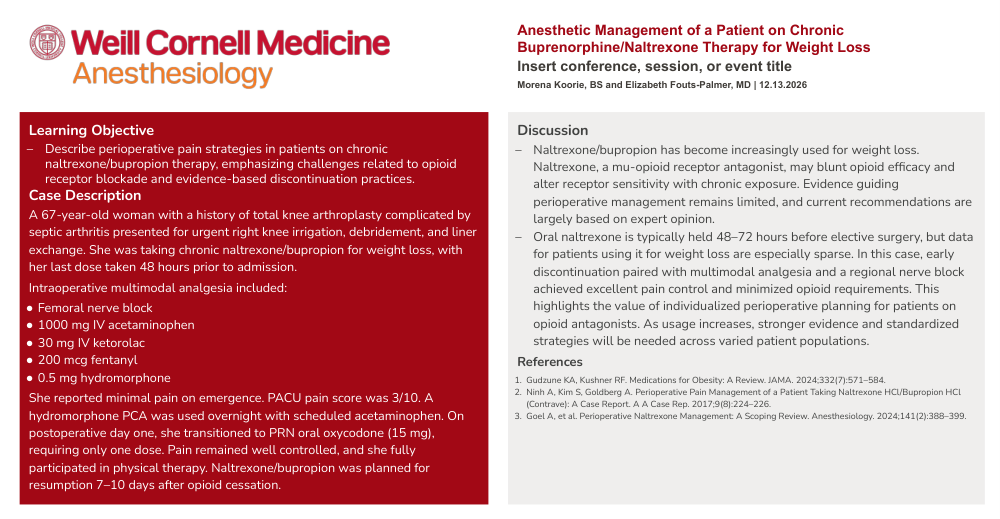
Anesthetic Management of a Patient on Chronic Buprenorpine/Naltrexone Therapy for Weight Loss
Poster Presenter
Authors
Affiliations
Part of Topic
Perioperative Management - Regional and Acute Pain
Learning Objective
-
Describe perioperative pain strategies in patients on chronic naltrexone/bupropion therapy, emphasizing challenges related to opioid receptor blockade and evidence-based discontinuation practices.
Case Description
A 67-year-old woman with a history of total knee arthroplasty complicated by septic arthritis presented for urgent right knee irrigation, debridement, and liner exchange. She was taking chronic naltrexone/bupropion for weight loss, with her last dose taken 48 hours prior to admission.
Intraoperative multimodal analgesia included:
-
Femoral nerve block
-
1000 mg IV acetaminophen
-
30 mg IV ketorolac
-
200 mcg fentanyl
-
0.5 mg hydromorphone
She reported minimal pain on emergence. PACU pain score was 3/10. A hydromorphone PCA was used overnight with scheduled acetaminophen. On postoperative day one, she transitioned to PRN oral oxycodone (15 mg), requiring only one dose. Pain remained well controlled, and she fully participated in physical therapy. Naltrexone/bupropion was planned for resumption 7–10 days after opioid cessation.
Discussion
-
Naltrexone/bupropion has become increasingly used for weight loss. Naltrexone, a mu-opioid receptor antagonist, may blunt opioid efficacy and alter receptor sensitivity with chronic exposure. Evidence guiding perioperative management remains limited, and current recommendations are largely based on expert opinion.
-
Oral naltrexone is typically held 48–72 hours before elective surgery, but data for patients using it for weight loss are especially sparse. In this case, early discontinuation paired with multimodal analgesia and a regional nerve block achieved excellent pain control and minimized opioid requirements. This highlights the value of individualized perioperative planning for patients on opioid antagonists. As usage increases, stronger evidence and standardized strategies will be needed across varied patient populations.
References
-
Gudzune KA, Kushner RF. Medications for Obesity: A Review. JAMA. 2024;332(7):571–584.
-
Ninh A, Kim S, Goldberg A. Perioperative Pain Management of a Patient Taking Naltrexone HCl/Bupropion HCl (Contrave): A Case Report. A A Case Rep. 2017;9(8):224–226.
-
Goel A, et al. Perioperative Naltrexone Management: A Scoping Review. Anesthesiology. 2024;141(2):388–399.