358 posters, 97 topics, 122 sessions, 958 authors, 239 institutions
ePostersLive by SciGen Technologies S.A. All rights reserved.
79th PostGraduate Assembly in Anesthesiology 2025
December 12 - 15, 2025 | New York City

3031
Hemodynamic Parameters During Anesthetic Induction With Propofol or Thiopental in Neonates: A Cross-Sectional Study
Poster Presenter
Authors
Affiliations
Part of Topic
Pediatric
Introduction:
Anesthetic management in neonates presents distinct challenges due to unique pharmacokinetic and physiological characteristics. Thiopental, a barbiturate with a long history of use in intravenous induction, and propofol, a lipophilic hypnotic widely used off-label in neonates, have both shown variable hemodynamic effects in this population. However, literature on comparative data remains limited and sometimes contradictory. This study hypothesized that the choice of induction agent (propofol vs thiopental) may result in different hemodynamic outcomes in neonates. We aimed to evaluate and compare heart rate, blood pressure, and oxygen saturation following induction with either agent.
Methods:
This cross-sectional, retrospective study evaluated medical records of 111 neonates aged 0–28 days who underwent general anesthesia between January 2017 and May 2019. Data were extracted from anesthetic records, including demographics, ASA classification, drugs used during induction (propofol or thiopental), and hemodynamic parameters (heart rate, systolic/diastolic blood pressure, and oxygen saturation) at baseline and at 5, 10, 15, and 20 minutes post-induction. Associations with atropine and neuromuscular blockers were also analyzed. Data were analyzed using SPSS v18. Chi-square tests assessed categorical variables, and the Mann-Whitney U test was applied to compare continuous outcomes between groups. Significance was set at p ≤ 0.05.
Results:
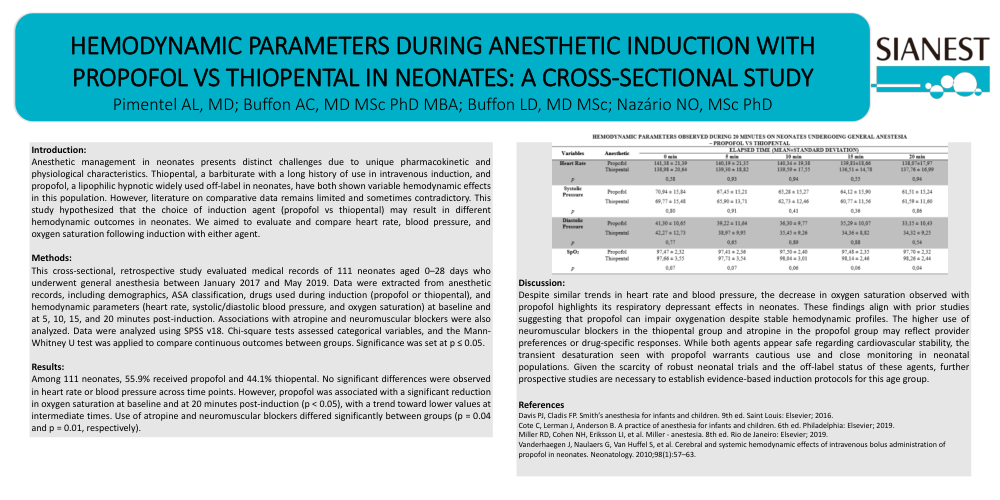
Among 111 neonates, 55.9% received propofol and 44.1% thiopental. No significant differences were observed in heart rate or blood pressure across time points. However, propofol was associated with a significant reduction in oxygen saturation at baseline and at 20 minutes post-induction (p < 0.05), with a trend toward lower values at intermediate times. Use of atropine and neuromuscular blockers differed significantly between groups (p = 0.04 and p = 0.01, respectively).
Discussion:
Despite similar trends in heart rate and blood pressure, the decrease in oxygen saturation observed with propofol highlights its respiratory depressant effects in neonates. These findings align with prior studies suggesting that propofol can impair oxygenation despite stable hemodynamic profiles. The higher use of neuromuscular blockers in the thiopental group and atropine in the propofol group may reflect provider preferences or drug-specific responses. While both agents appear safe regarding cardiovascular stability, the transient desaturation seen with propofol warrants cautious use and close monitoring in neonatal populations. Given the scarcity of robust neonatal trials and the off-label status of these agents, further prospective studies are necessary to establish evidence-based induction protocols for this age group.
References
Davis PJ, Cladis FP. Smith’s anesthesia for infants and children. 9th ed. Saint Louis: Elsevier; 2016.
Cote C, Lerman J, Anderson B. A practice of anesthesia for infants and children. 6th ed. Philadelphia: Elsevier; 2019.
Miller RD, Cohen NH, Eriksson LI, et al. Miller - anestesia. 8th ed. Rio de Janeiro: Elsevier; 2019.
Vanderhaegen J, Naulaers G, Van Huffel S, et al. Cerebral and systemic hemodynamic effects of intravenous bolus administration of propofol in neonates. Neonatology. 2010;98(1):57–63.