215 posters, 5 topics, 22 sessions, 596 authors, 283 institutions
ePostersLive by SciGen Technologies S.A. All rights reserved.
Obstetric Anaesthesia Annual Scientific Meeting 2025
May 15 - 16, 2025 | ICC, 2 Lanyon Place, Belfast BT1 3WH

6771341
What can anaesthetists learn from MNSI recommendations?
Poster Presenter
Part of Topic
Quality Improvement
What can anaesthetists learn from MNSI investigations?
INTRODUCTION
The Maternity and Newborn Safety Investigations (MNSI) programme is part of a national strategy1 to improve maternity safety across the NHS in England. Reports are only shared with the family and involved NHS organisations. Dissemination of lessons learnt, relevant to anaesthesia, is essential to improve maternity care.
METHODS
A log of findings and recommendations from all completed reports between 1 April 2019 to 31 December 2024 was searched using predefined keywords relating to obstetric anaesthesia or analgesia. Recommendations were categorised by two independent clinical advisors to identify areas of learning, and two categories were used for coding. Permission for secondary learning from reports is granted by families during the consent process.
RESULTS
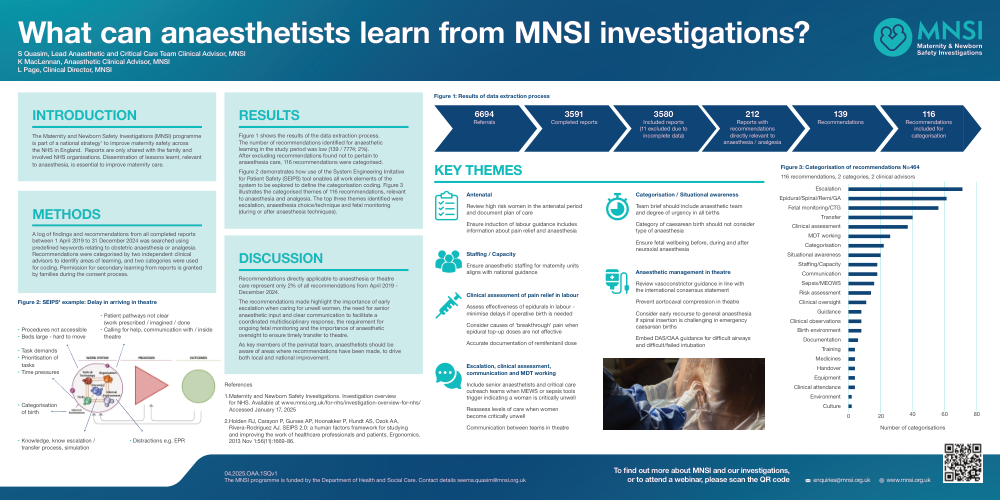
Figure 1 shows the results of the data extraction process. The number of recommendations identified for anaesthetic learning in the study period was low (139 / 7774; 2%). After excluding recommendations found not to pertain to anaesthesia care, 116 recommendations were categorised. Figure 2 demonstrates how use of the System Engineering Imitative for Patient Safety (SEIPS) tool enables all work elements of the system to be explored to define the categorisation coding. Figure 3 illustrates the categorised themes of 116 recommendations, relevant to anaesthesia and analgesia. The top three themes identified were escalation, anaesthesia choice/technique and fetal monitoring (during or after anaesthesia techniques).
DISCUSSION
Recommendations directly applicable to anaesthesia or theatre care represent only 2% of all recommendations from April 2019 - December 2024. The recommendations made highlight the importance of early escalation when caring for unwell women, the need for senior anaesthetic input and clear communication to facilitate a coordinated multidisciplinary response, the requirement for ongoing fetal monitoring and the importance of anaesthetic oversight to ensure timely transfer to theatre. As key members of the perinatal team, anaesthetists should be aware of areas where recommendations have been made, to drive both local and national improvement.